
Water In The Garden
STORY TERESA MATAMOROS
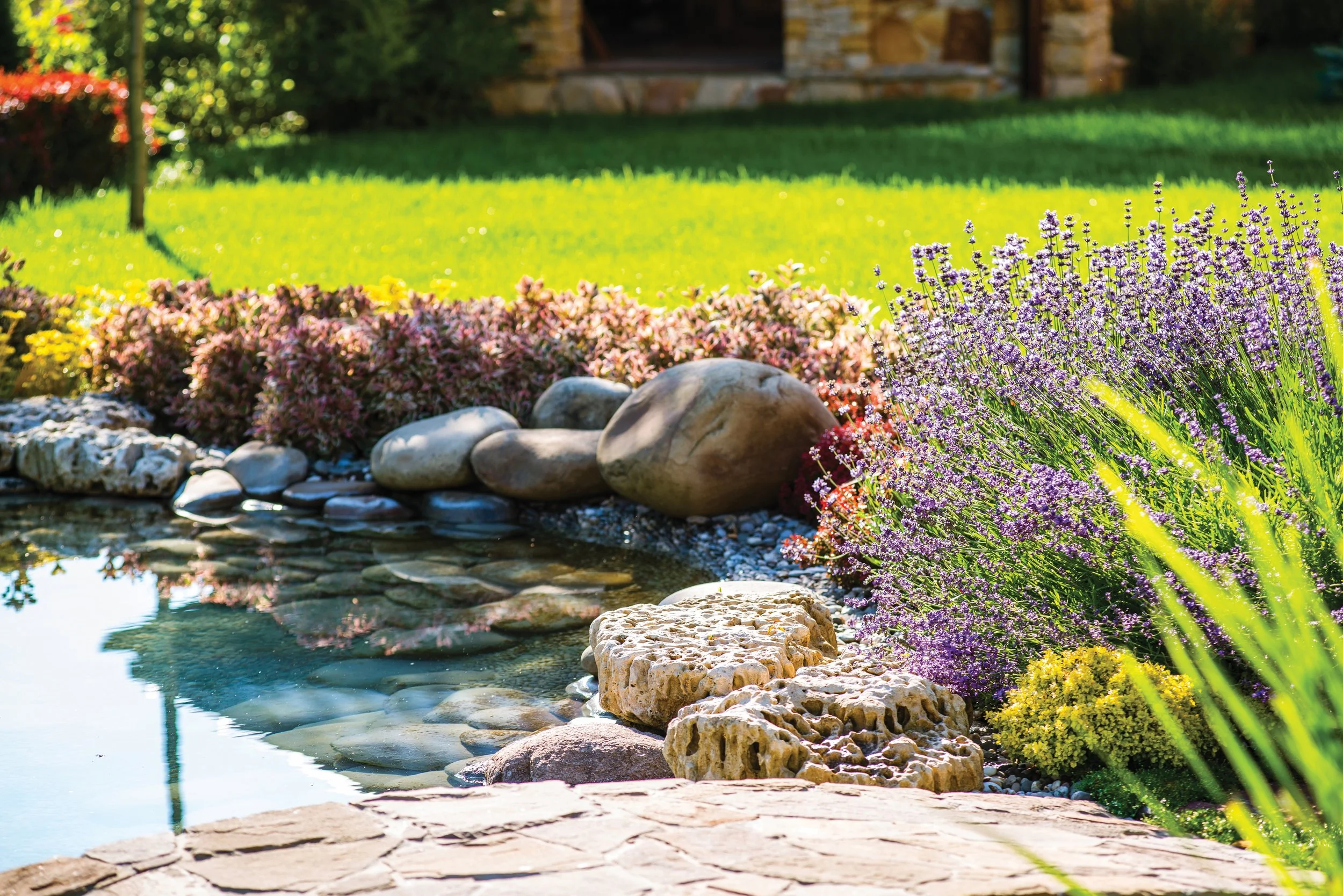
Water is the source of life and has been an essential design element in the garden for many millennia. Water in the garden is about abundance and flow. It can be a source of fun, serenity, relaxation, joy, curiosity, mystery and magic.
Water fosters biodiversity, contributing to a healthier and more balanced garden environment. If you want birds or butterflies in your garden, water is a must.
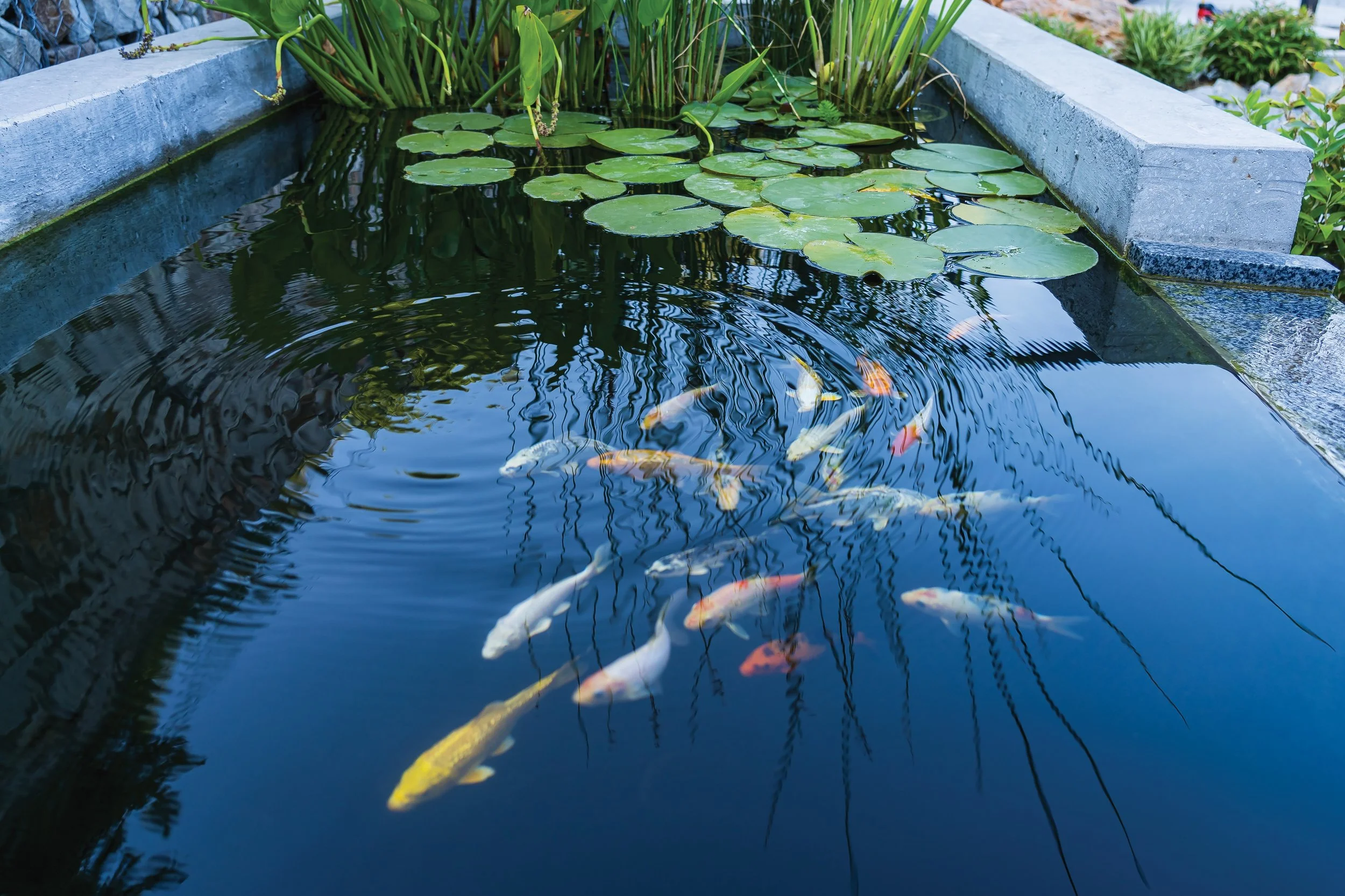
Frogs will come if you have a pond. Some fish can help with the algae and pond waste and can eat insects and mosquito larvae. However, fish may attract raccoons and herons. A great blue heron visited my small pond many years ago and had a wonderful meal of all my goldfish! I made sure my next pond had some strategically placed rocks for the fish to hide.
For the winter, a small heater for a birdbath or a larger one for a pond is a great way to keep a small area of water from freezing, so birds can visit all year long. This also allows for gases from decaying organic matter to escape, which is very important for overwintering fish and frogs.
The sound of water contributes to the sensory experience, providing a calming backdrop that drowns out the hustle and bustle of everyday life. If you live by a busy street or beside a noisy neighbour, a waterfall from a pond or splashes from a single fountain are wonderful ways to distract from those noises.
It really doesn’t matter how small your space is – there is a water feature for you.
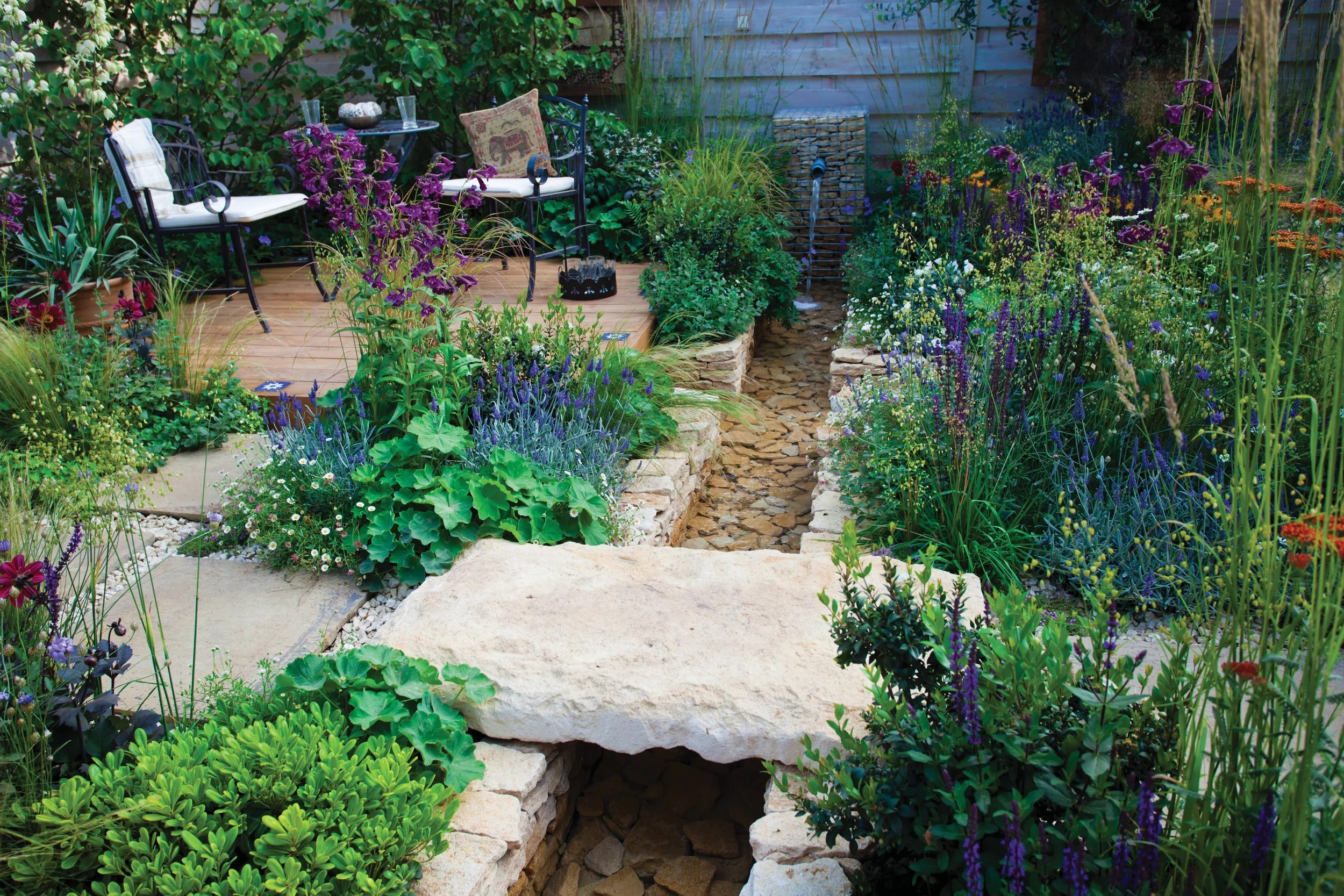
OPTIONS
TABLETOP
There are tabletop water features that fit on a small table in a small space, like a balcony. Smaller homes with small gardens could add a birdbath or a stand-alone fountain that sits in a dish with a small recirculating pump. You could even use a half-barrel or water trough. All it takes is a few water plants like water lilies and marginal plants like irises and voilà, you have a miniature water garden. Adding a little spitter (small fountain) will oxygenate the water so you will have success with fish in your little water feature.
INGROUND
If you have a larger garden, an inground pond might be the thing. You can purchase preformed liners for a pond, or you can dig one in the ground in whatever shape you want or need. I would recommend that whichever you choose, go a little bigger than you think you want. Ponds somehow look smaller once they are in the ground.
WATERFALLS
Pondless waterfalls are the way to go if you just want to have the therapeutic qualities of water without the maintenance of a pond.
Space, budget and style will help determine what kind of water feature to incorporate into your garden. A townhouse might call for a small wall fountain spilling into a basin and a reflecting pool would match a modern house in the city. Ponds with waterfalls should look natural, or as natural as possible, in their environment. The environment of where you live will help make your choices.
Regardless of the type of water feature you decide on, make sure it is situated close to the house with good views from the windows and/or seating areas or patios. Ponds should have some sun but keep in mind two-thirds of the surface should be covered with plants to reduce the amount of algae that can grow.
The integration of water features in a garden transcends mere aesthetics, offering a plethora of benefits for both the environment and the well-being of its inhabitants. Embracing the allure of water in the garden is not just an aesthetic choice but a transformative journey toward cultivating a space that nurtures and rejuvenates the soul. OH