
Wood-Wide Web
STORY TERESA MATAMOROS
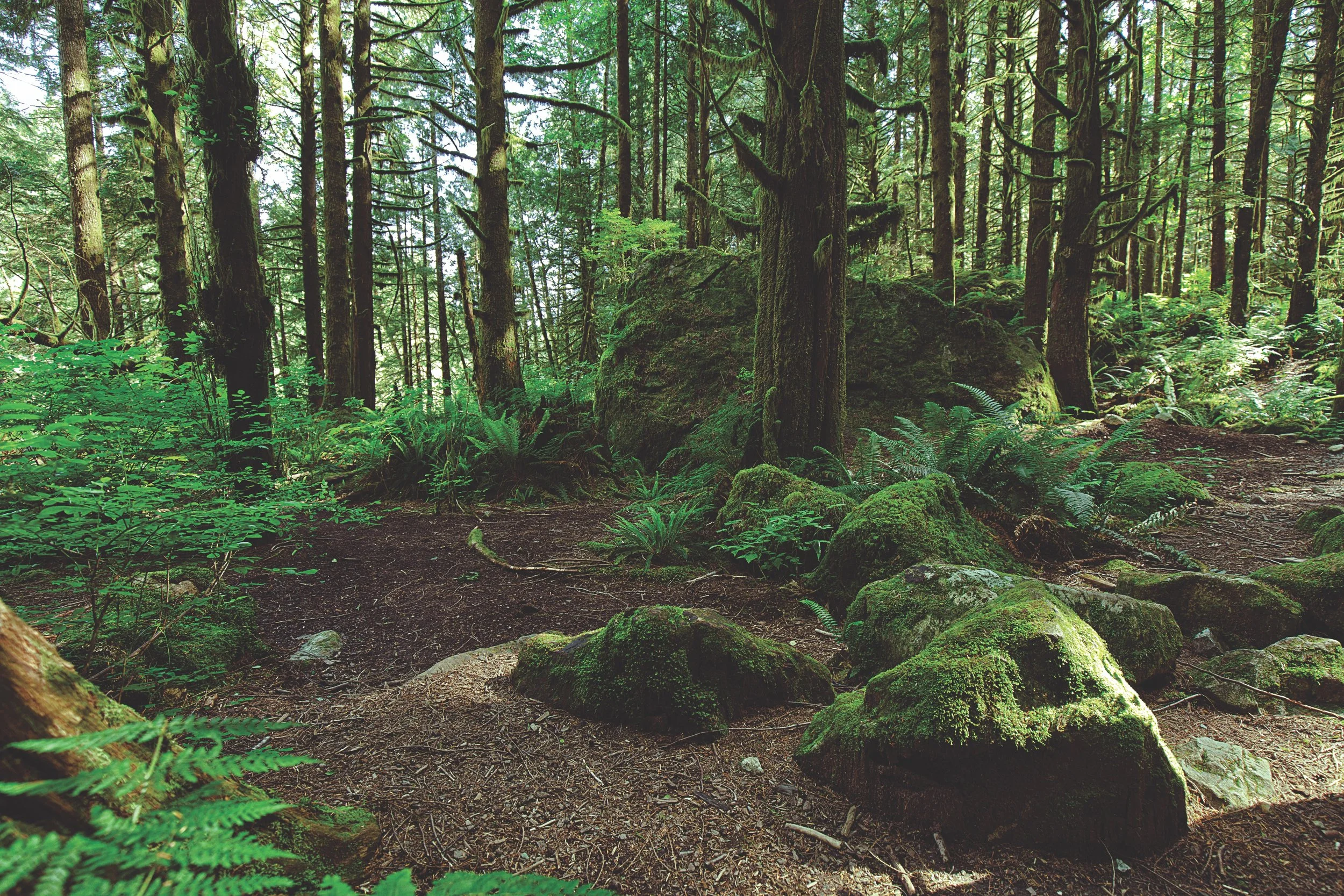
MYCELIUM YOU SAY! WHAT THE HECK IS MYCELIUM? MYCELIUM IS HAVING ITS DAY IN THE GARDENING SPOTLIGHT, HOWEVER, IT REALLY PREFERS THE DARK.
Mycelium is best thought of as a process, not a thing.
Mycelium is part of every fungus, and mushrooms are the fruits of fungi. Like an apple on a tree, the apple is the fruit of a much larger entity that also has roots, trunks, branches and leaves. Mushrooms are the fruiting bodies of fungi, the place where spores are produced. Spores are the way fungi propagate. But not all fungi produce mushrooms.
Fungi are part of the “wood-wide web,” a term Dr. Suzanne Simard, a forest ecologist, coined in 1997. Fungi are everywhere and they can be likened to a sort of underground internet.
Mycorrhizal fungus, a type of mycelium that has a special relationship with the roots of trees and shrubs, is a beneficial fungus. Mycorrhizae can’t produce their own food (carbohydrates and sugars) so they anchor themselves to plant roots and send out miles of mycelium into the soil for a reconnaissance of nutrients. By doing so, they increase the surface of the roots so trees, shrubs and perennials can take up more nutrients while sharing some carbs with the mycorrhizae.
It is a symbiotic process, a close relationship that forms to the advantage of each of the unrelated organisms. Most plants depend on fungi to provide nutrients in exchange for carbs and sugars. As a result of this association, the plant increases its drought tolerance as well.
Many, many plants depend on mycorrhizal fungi, which help link trees to create networks (the wood-wide web) so plants and fungi can form healthy relationships. It’s how trees talk and support each other and share nutrients.
Plants rely on these beneficial fungi not only for nutrition but also for defense. These fungi will completely surround young roots and prevent other predators from reaching the root surface.
There are thousands of species of mycorrhizal fungi and most plants form relationships with many different species. A single fungus can form relationships with many different plant species. This network pretty much connects all the plants in your garden or any ecosystem, and therefore, the plants that are otherwise unrelated can send nutrients to each other.
Dr. Suzanne Simard, author of Finding the Mother Tree: Discovering the Wisdom of the Forest, found this to be true in her research in British Columbia.
So, what does this all mean to us gardeners and farmers? It means we might want to rethink our cultivation practices. Deep cultivation or tilling the soil severs the fungal mycelium and disrupts plant nutrients, water uptake and nutrient exchange. Mycorrhizal fungi are also negatively affected by pesticides and chemical fertilizers. We should use compost as fertilizer instead.
When planting new trees and shrubs, use a commercial mycorrhizal inoculum, found at your garden centre. It can be added to existing plants in your garden too, or, if it is practical, the next time you are in the forest you can scoop up a bag of soil and add it to your planting hole for your new tree. It will have abundant naturally occurring mycorrhizal fungi.
We have to garden with a sense of relationship between every living thing, especially plants, soils, fungi, bacteria, worms, bees and birds. Success in our gardens will be easy when we work with nature! OH