
Small Trees For Small Gardens
STORY TERESA MATAMOROS
There’s nothing lovelier than sitting under a large shade tree in the heat of the summer. But many of us don’t have the space to plant a large shade tree like an oak or sugar maple.
Don’t despair! There are several smaller trees, less than 10 metres, that are well suited and very desirable that we can plant in our city or town gardens.
Here is a list of some native and some non-native trees that I think deserve some attention. They are hardy for most of Southern Ontario, have some all-year interest, generally don’t require special growing conditions and still attract pollinators with either flowers or fruit.
You won’t find birches, crabapples, Japanese maples or serviceberries on this list, as they are already well-represented in many of our gardens.
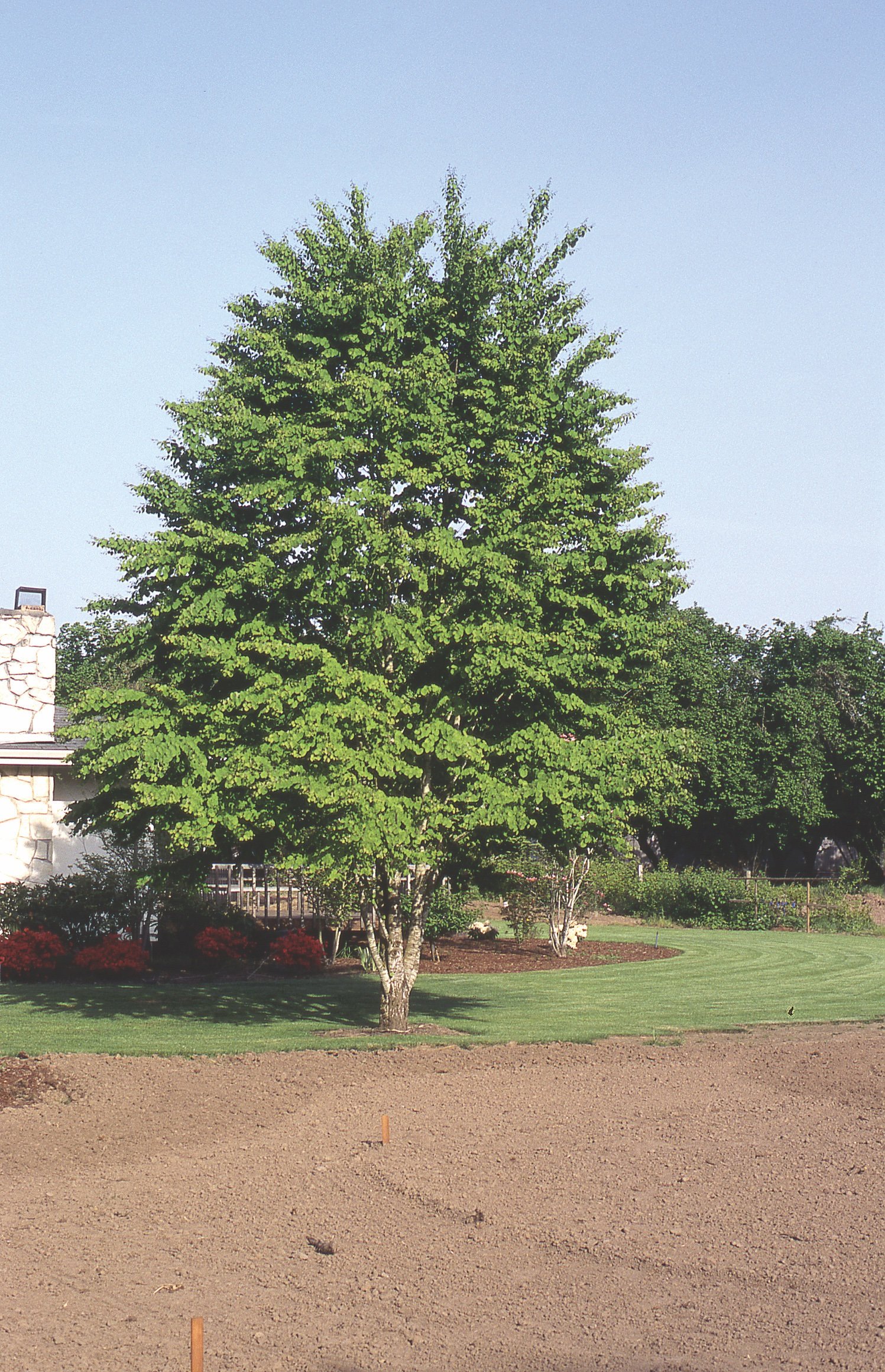
1. Katsura tree – Native to Japan, cercidiphyllum japonicum, “Hanna’s Heart,” grows to eight metres tall and three metres wide. Pyramidal in youth and a more compact growth habit. Heart-shaped green leaves turn apricot yellow in fall and have a wonderful spicy cotton candy odour.
2. Eastern redbud – Cercis canadensis is a native of the Carolinian forest. It is a very versatile tree for small properties. It comes with purple leaves (“forest pansy”), yellow leaves (“hearts of gold”) and upright, weeping and contorted forms with pink or white flowers.
3. Magnolia stellata – “Royal star,” not uncommon, is a hardy shrub or a small tree from Japan, growing up to five metres with a three-metre spread. The upright branches have large, fragrant, overlapping, strap-like double-white flowers. The burst of flowers and fragrance is worth the lack of fall colour! It also has nice bark and fuzzy flower buds for winter interest. There are many smaller magnolias on the market now that are suitable for smaller properties.
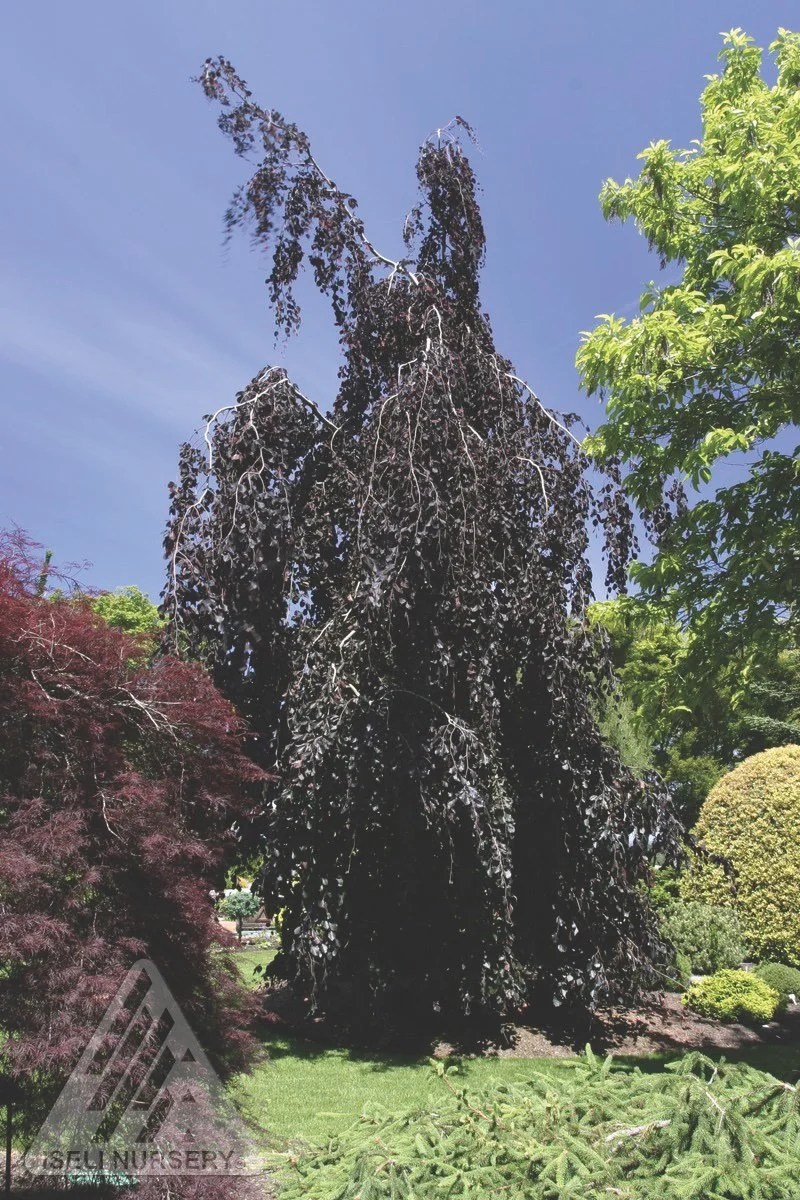
4. Purple fountain beech – Fagus sylvatica, “purple fountain,” is the perfect specimen when you need a deep purple colour to offset the rest of the garden. This weeping variety of beech tops out at nine-metres high and three-metres wide, adding architectural interest. Leaves can turn tan and stay on the tree for the winter. Every garden needs a beech tree!
5. Ironwood – Ostrya Virginiana is an eastern native reaching up to 12-metres tall. Has birch-like leaves turning yellow in the fall with interesting hop-like seed pods. Naturally growing as an understory tree, it can take a lot of shade.
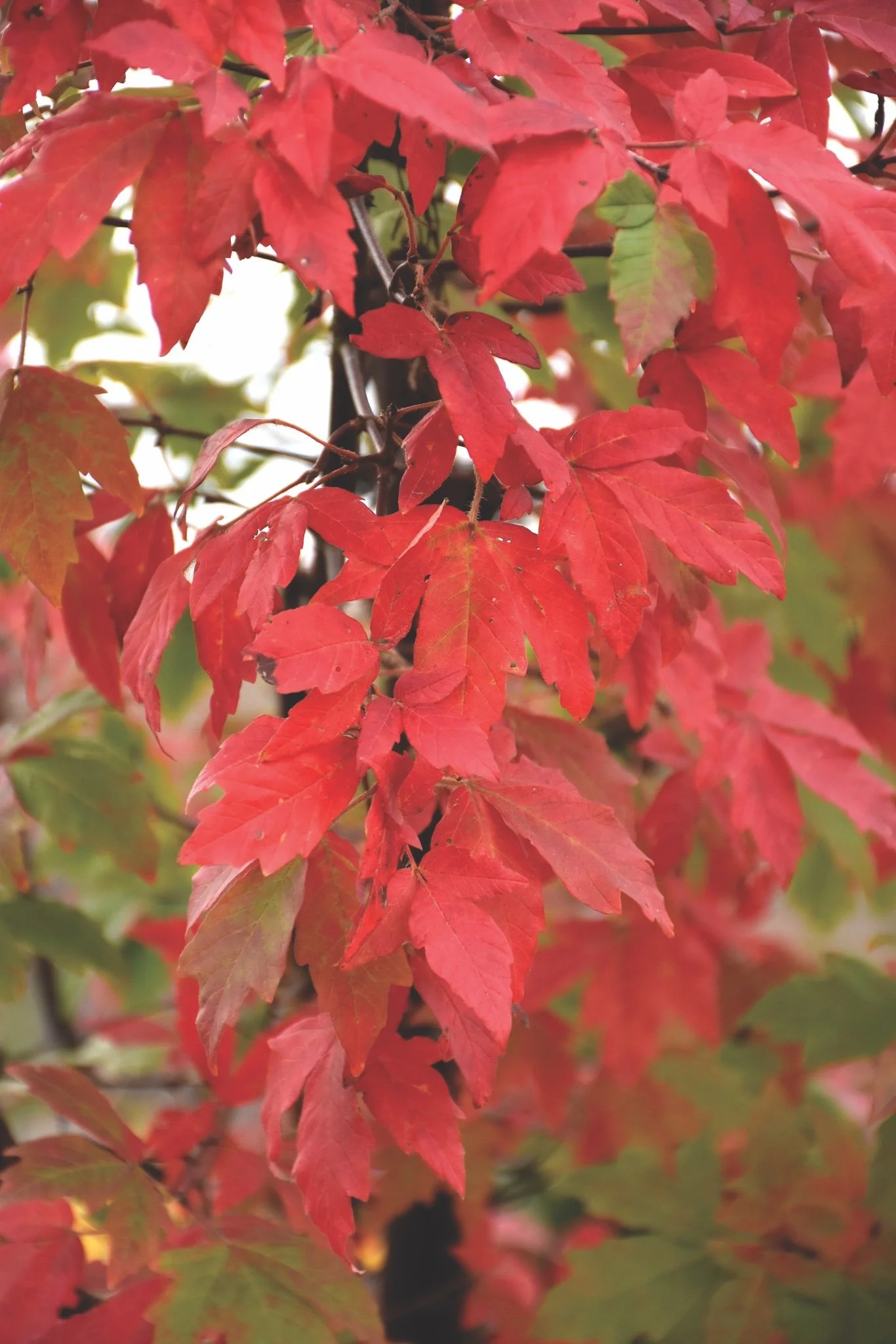
6. Paperbark maple – Acer griseum, a non-invasive native to central China, has very cool bark. Curls of cinnamon-coloured bark on this small tree are reminiscent of our paper birch, a plus for winter interest. The green leaves turn brilliant red in the fall.
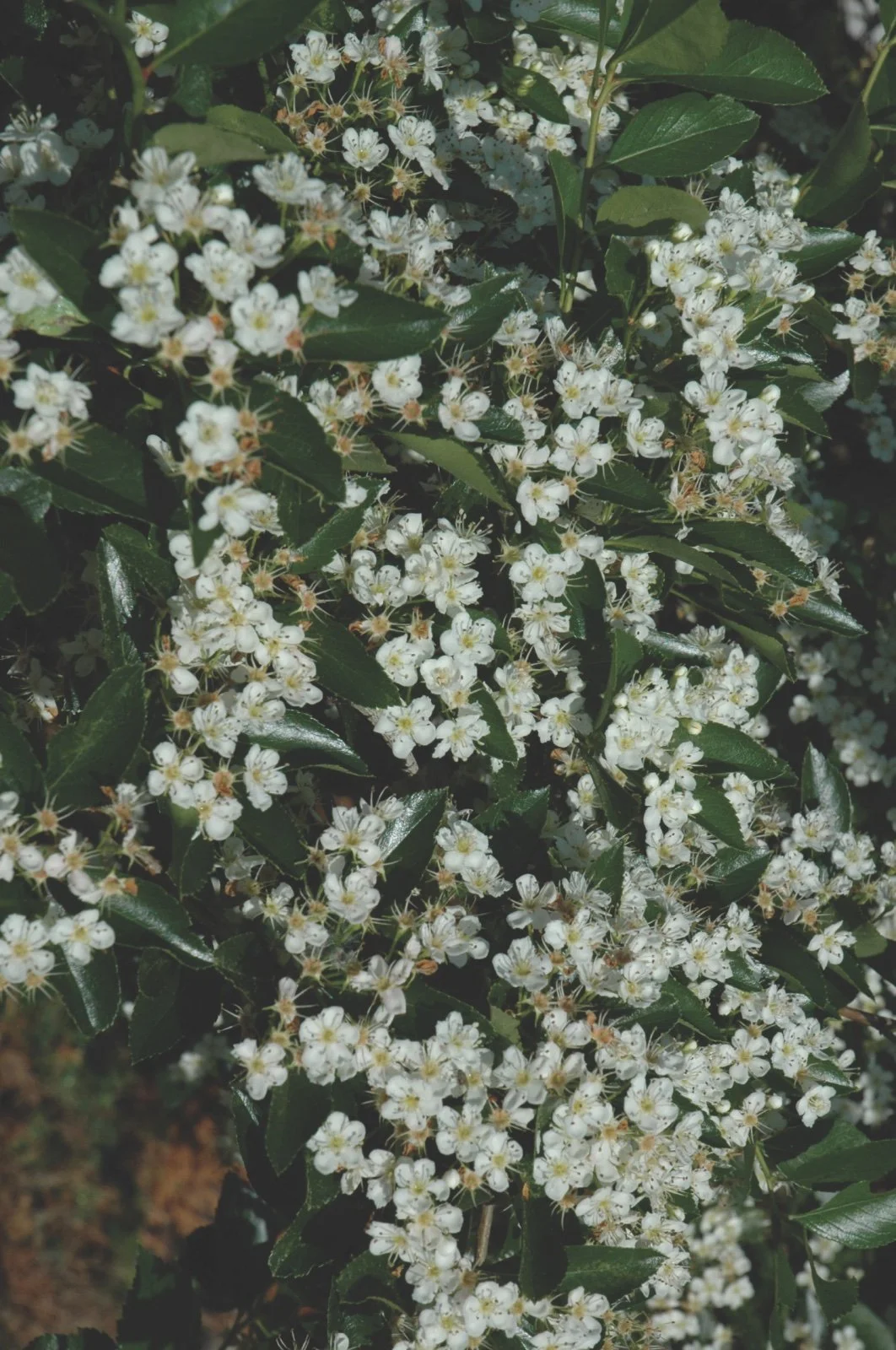
7. Crusader hawthorn – Crataegus crus-galli var. inermis, (meaning no thorns), “crusader” is an interesting tree for the home garden as it can be as wide as it is tall. So, when you need a horizontal element in the design, this tree will fit the bill. White flowers give over to red-orange fruit enjoyed by the birds, and there is good fall colour as well.
8. Blue beech/musclewood – Carpinus caroliniana is a handsome native from Ontario to Nova Scotia. Often seen in the woods, so it will take some shade. The bark is lovely, grey-coloured and has the appearance of flexed biceps and forearm muscles, hence the name musclewood.
9. Nannyberry – Viburnum lentago is a six-metre small tree or large shrub with flat-topped white flowers followed by bluish-black fruit that birds love. The glossy green leaves turn reddish-purple in the fall. They take some shade as well.
10. Pin cherry – Prunus pensylvanica, one of our native cherries, is only 10-metres tall. It has white flowers and long-lasting red pin-like fruit that the birds and wildlife like. It also has exfoliating bark for winter interest. Cherries have great ecological importance for our environment.
11. Persian spire – Parrotia persica, “Persian spire,” is native to Iran but grows quite well here and needs to be planted more. It is part of the witch hazel family and has very few pests. The leaves turn from yellow to orange to scarlet in the fall. The bark is interesting in the winter, too, as it has a grey, green, white and brown mosaic as it matures.
While the charm of large shade trees is undeniable, numerous smaller alternatives can thrive in urban gardens and provide a wealth of beauty and interest throughout the seasons. With any of these trees, you can create vibrant, sustainable green spaces that enhance your surroundings and support local wildlife and pollinators. Whether you’re drawn to fragrant blossoms, brilliant fall colours, or unique bark textures, these trees offer something for every garden enthusiast. OH