
Hedge Your Investment
STORY MELANIE REKOLA
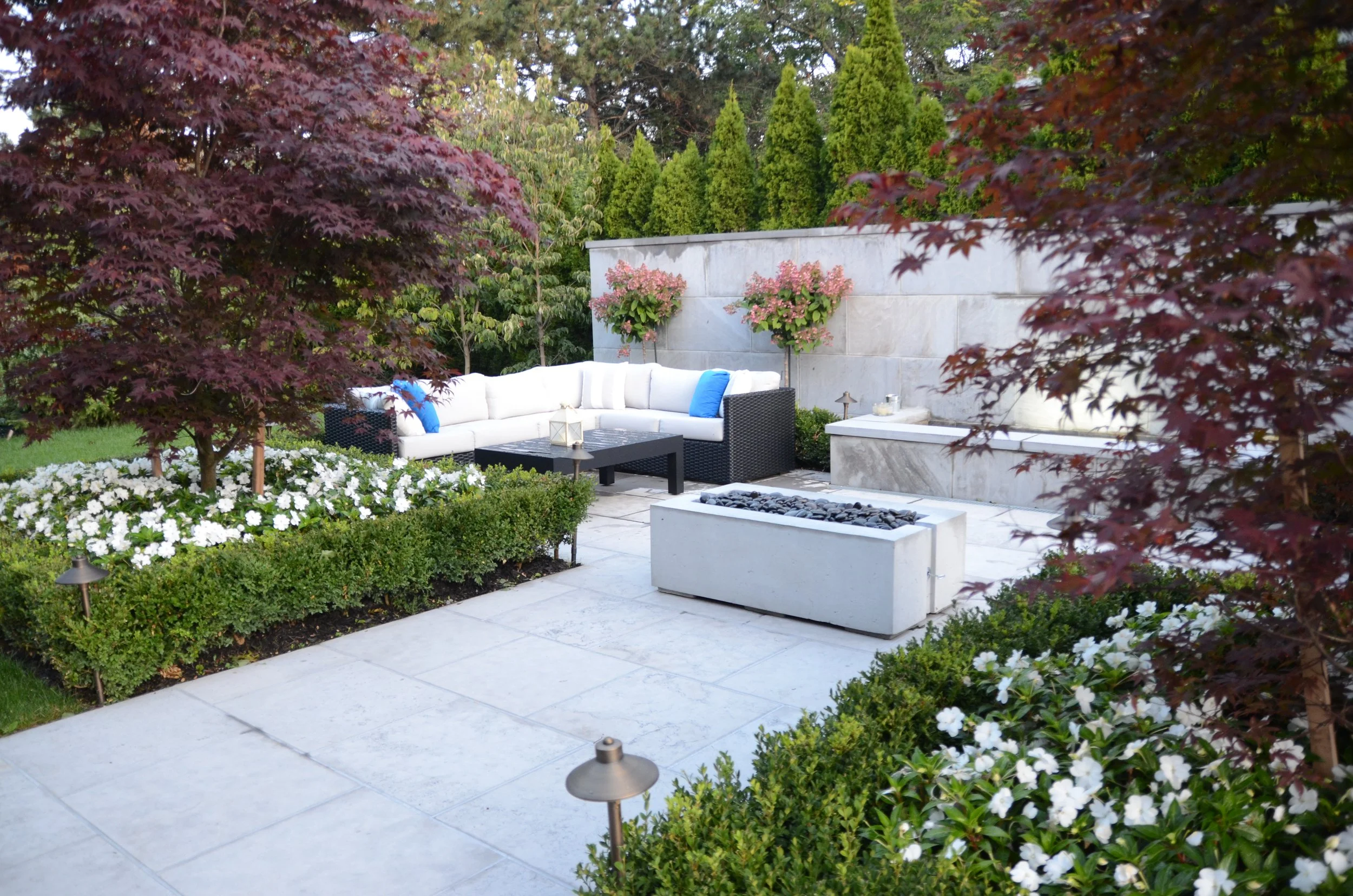
Clipped and formal hedgerows have charmed society for centuries. Used to create living privacy walls, boundaries and attractive garden borders, hedges have many practical uses and also add value to any property.
The use of hedges dates back to 4000 BC in ancient Egypt where the first boxwoods were clipped for ornamental purposes. Amazingly, this style has some serious staying power as they are still being used present day. As mentioned, hedges can serve multiple purposes: they can conceal unsightly views, create privacy from nosy neighbours and significantly cut down on noise pollution. Hedging can make a patio space warm and cosy by acting as a windbreak and it can cut down on snow accumulation by acting as a snow fence. It can delineate property lines and formalize gardens that contain more unruly plant life by creating a tidy edge.
Hedges can be planted in a range of types and sizes depending on the required result. Select the plant that meets your needs.
THYME: One of the shortest hedge plants available and sometimes called edges instead of hedges, these borders look especially smart in formal herb gardens when acting as dividing lines between other, wilder looking herb species.
BOXWOOD: The “little black dress” of the garden world (meaning everyone should have one), boxwood is the perfect small to medium size hedge. Its pretty evergreen leaves take very well to pruning. Korean Littleleaf Boxwood (Buxus microphylla var koreana) is one of the heartiest, just be sure to plant it in an area that isn’t exposed to high winds or road salt.
YEW: Yews make gorgeous hedges but range wildly in height from two-and-a-half-feet to over 50 feet so read the plant labels carefully. As with most evergreens, it can be susceptible to wind burn and needs to be protected from strong winter winds.
CEDAR: Probably the hedging you are most familiar with, cedar is an ideal choice where a tall, slim, year-round privacy screen is needed. White cedar, black cedar, even emerald cedar will work well. Rest assured, cedar trees don’t specifically attract mosquitoes though any moist and shady spot will! Prune annually in mid-July for best results.
HEMLOCK: Although Canadian hemlock grow as large trees in the wild, they are sometimes sold in shrub form for use as hedges. Prune hemlock hedging twice per year, from late June to late August, for the first three years to encourage dense growth. After three years, prune once in late June, just don’t cut the leader until it’s at the desired height.
NORTHERN PRIVET: A lovely fast-growing deciduous hedge of about six feet in height. It has small bright green leaves and enjoys getting trims.
ALPINE CURRENT: A very hearty mid-sized deciduous shrub with interesting leaf shape. It also tolerates high winds, cold and road salt well.
PYRAMIDAL ENGLISH OAK, HORNBEAM, DAWYCK BEECH: Perhaps not the typical scenario that most people think of for hedging, but really, any narrow deciduous tree can be planted tightly in a row to style a tall hedge. These work well where a tall screen is needed but spacing is tight. They can look very stately.
LILAC, DOGWOOD, ROSE OF SHARON, SPIREA, BURNING BUSH, HYDRANGEA, WEIGELA: Many garden variety deciduous shrubs can be trained as hedges, just be sure to prune yearly to achieve the desired height and width. It’s also imperative that if you’d like your hedge to flower, prune at the correct time of year so that you aren’t removing the flower buds prematurely. A good rule of thumb is prune late-flowering shrubs in early spring and spring-flowering shrubs after flowering.
The amount of space you have and how dense you’d like your screen will determine the number of rows you plant. For large spaces, consider planting a double row to make a hedge fill in twice as fast. Spacing between rows is based on crown width, but at a minimum try to avoid root crowding by setting at least 12- to 24-inches apart, measuring from the centre of the plant. Spacing will depend on the type of shrub or tree chosen, how close you’d like them at maturity, and your patience level. Keep in mind, when planting in rows close together, trees and shrubs will not spread out as wide as if they were a single species in a landscape.
Start training your hedge after it is established and growing vigorously. Generally this takes one to two years after planting. To train, trim top and sides as required for the species, removing about one-half the length of new shoots. Ideal hedge shapes are wider at the base than the top to allow sunlight to reach the lower leaves.
It can take a few years after planting for a new hedge to take shape and start looking great. Be patient, they are worth the investment! OH