
Treasure Hunt
STORY LYNNE RICHARDSON | PHOTOGRAPHY NIGEL EVES & DAVID TURNER
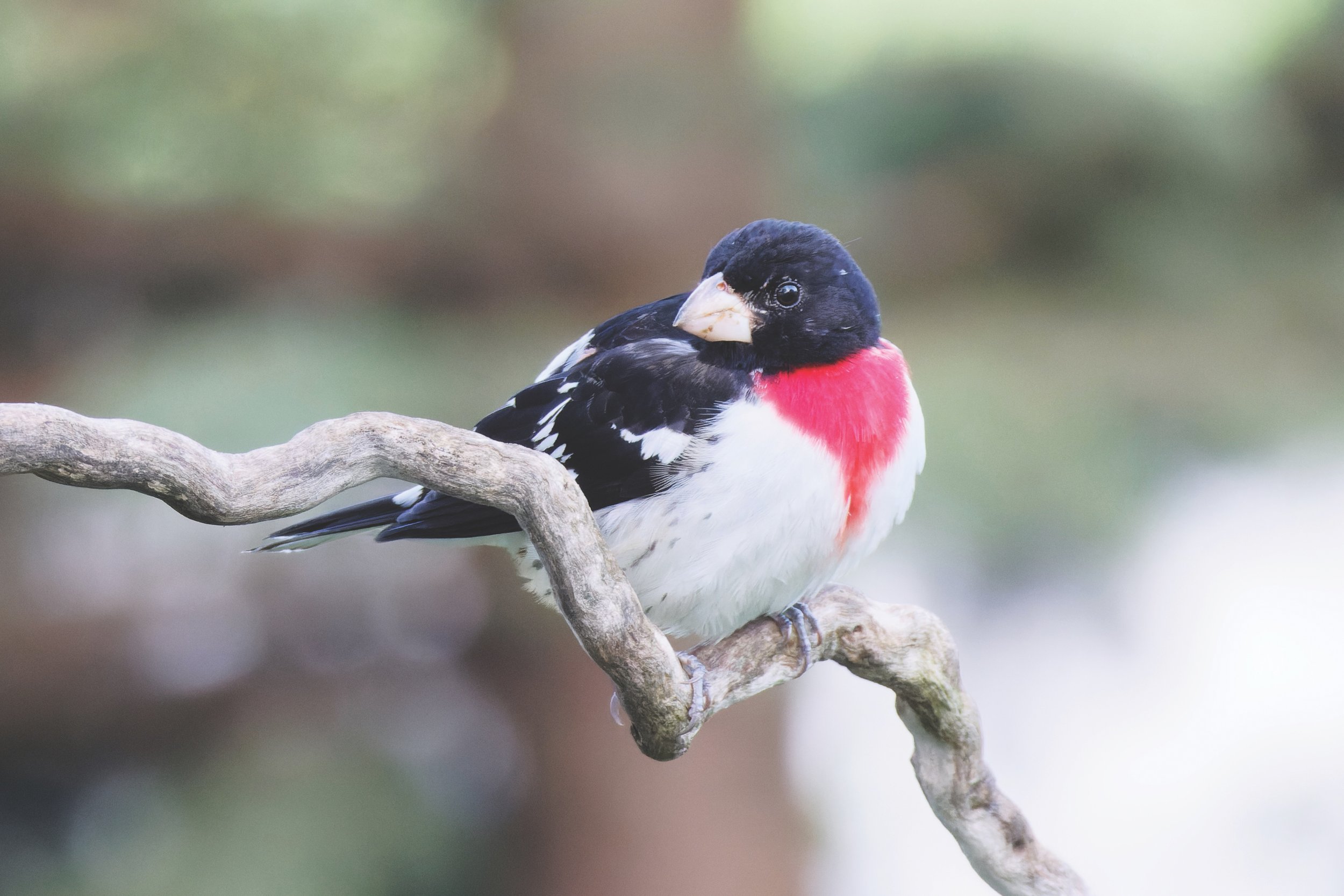
Rose-breasted Grosbeak
SENSE OF WONDER
When I was a kid, my parents gifted me a little bird guide for my birthday. It focused my budding interest and put names to birds I previously didn’t know. It introduced me to birds I didn’t even know existed. I still remember going through that book page by page, wondering if I would be lucky enough to see birds such as the stunning Scarlet Tanager or the brilliant Indigo Bunting. Others caught my eye as well, but a group of five or so really stuck with me.
Years later, when out birding with a friend, he said something that reminded me of this handful of beautiful birds I had so desperately wanted to see. He opined that showing anyone five particular birds could potentially wow them into becoming birders. It turned out that his five birds were the same as the five I had seen in my childhood bird book. He called them, somewhat tongue-in-cheek, the Big Five.
Most of you are no doubt familiar with Africa’s Big Five, a term widely used by ecotour companies to describe the five big mammals that are the most eagerly sought after on safaris – elephant, lion, leopard, rhinoceros and African buffalo. This has caught on in other countries as well, with Canada boasting its own Big Five, often featured in our northern wildlife tours. Think polar bears, black bears, moose, beluga whales and bison.
So why not a Big Five for birders? I loved this idea, especially for beginning birders, as seeking out these species is rewarding because they are colourful, beautiful birds. It also gives you a start, a goal, a mission and fun. In fact, it has all the components of a classic treasure hunt.
THE HUNT
Think of a quest for these five particular birds as going on a treasure hunt. Every treasure hunter needs clues that will lead them to the hidden treasure. Knowing something about each species’ particular niche in the wild will help narrow down the search. But before we get to the clues, we need to know what our five are.
THE BIG FIVE
Here they are: the five treasures that will hopefully knock your socks off when you first lay eyes on them. They come in dazzling colours – the brilliant orange Baltimore Oriole, the indigo blue of the Indigo Bunting, the Scarlet Tanager, the Rose-breasted Grosbeak and the Red-headed Woodpecker. Now, let’s get started.
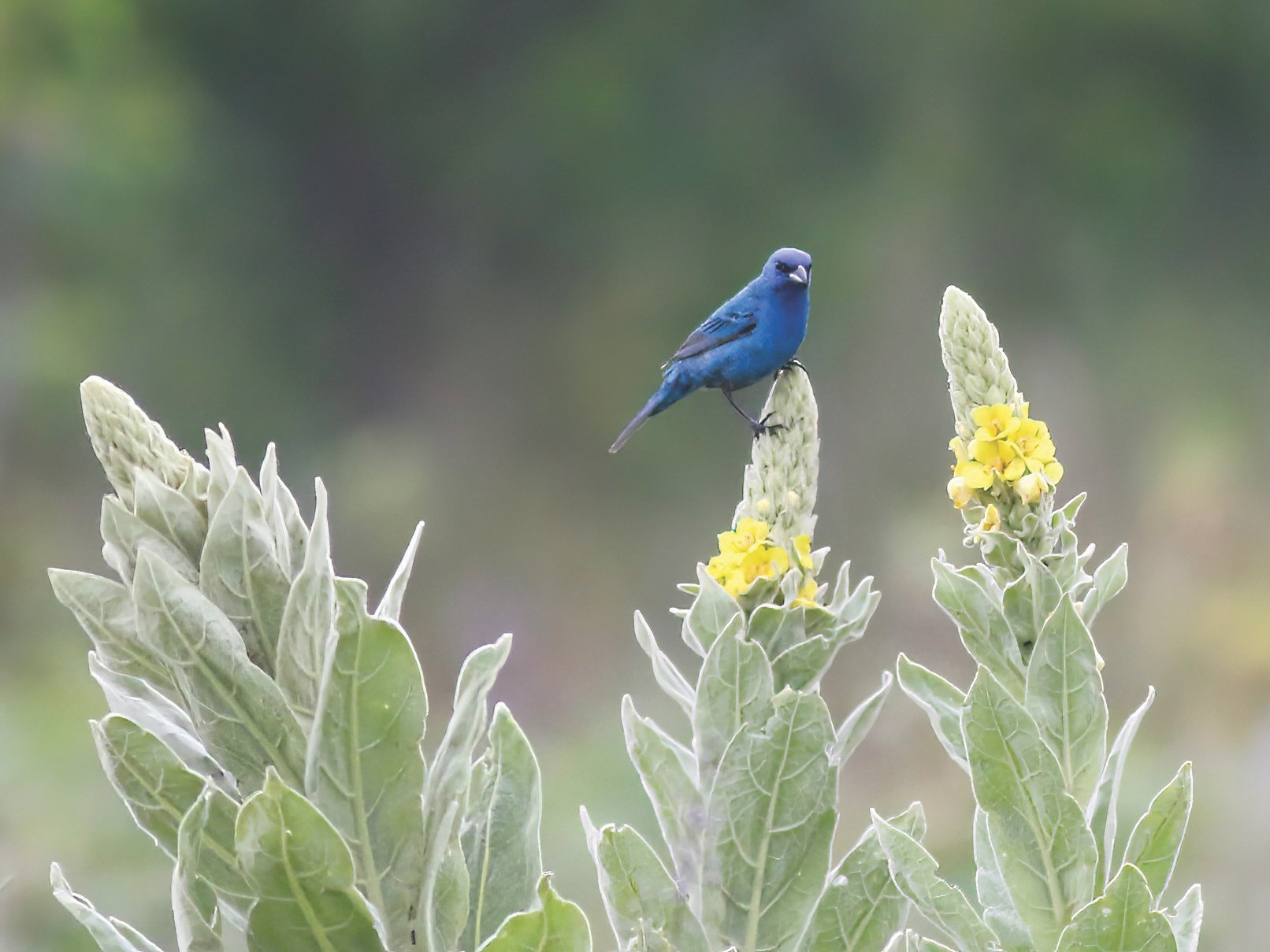
Indigo Bunting
BALTIMORE ORIOLE
A bird of tall, open deciduous woods, the Baltimore Oriole is perhaps the easiest treasure to find, as even the trees in your own backyard will attract this relatively common species. A bonus is their enthusiastic willingness to visit your feeders. Get an Oriole feeder, put out halved oranges or even grape jelly. But beware, the best time to see them is during spring migration when they are not picky about their habitat. They’re hungry and need to fuel up after their journey north and before they settle down to raising young. This window is fairly short, so be ready to start this search in May, as soon as they arrive. Listen for their clear, whistling song and a harsh chatter as they swoop onto the feeder. Finally, if you haven’t caught up with them during their migratory period, scan the outer ends of branches for their unique, long hanging nests swaying in the breeze. This treasure should be in the bag with relative ease (after all, I gave you at least six clues).
INDIGO BUNTING
Next up is the Indigo Bunting, a much sought-after species that people always seem to have difficulty finding, despite being fairly common and widespread. It’s a bird of open, shrubby fields and woodland edges. It sings its sweet, choppy song persistently from the top of a tall tree, so its notes can carry across a distance. But it’s a bit of a trickster, hiding its brilliant blue plumage by virtue of the fact that its feathers are actually not blue at all. It often looks like a nondescript small black bird sitting up there. Their colour comes from microscopic feather structures that refract and reflect blue light, much like the airborne particles that make the sky blue. So, don’t be fooled. Scan the tips of the highest tree branches for these stunners and wait for the light to shine right to reveal their brilliant blue. Bonus clue – Indigo Buntings may appear at your feeder for a day or two in their spring migration. Just don’t blink or you’ll miss them!
SCARLET TANAGER
Now the hunt gets a little harder. You’ll have to take a walk in the woods to find this dapper fellow, and even then, it’s a challenge as the Scarlet Tanager favours hanging out in the high canopy of tall, deciduous trees. Be prepared for a game of hide and seek. But the search is worth it. This species is a gorgeous bird. Its plumage has the look of red and black velvet. Fortunately, it has a giveaway in its song, which esembles that of a Robin in tempo and note but with a hoarse, burry overtone. So, tune up your ears and scan the leafy treetops for this raspy singer. This brilliant black-winged redbird will not hide from you indefinitely. And the wait will be worth it.
ROSE-BREASTED GROSBEAK
While in the woods, now is your chance to discover the Rose-breasted Grosbeak, which is somewhat more common and less shy than its scarlet neighbour. This denizen of deciduous woods is another forest feast for the eyes. It wears a striking, rose-coloured heart on its pure, white chest. If it flies by you, flashes of the rosy colour also adorn its underwings. But the first thing you might notice is its big, white beak! It’s a honker, hence the name. This species also has a Robin-like song, but it is a tad sweeter and faster. So, listen for the familiar, beautiful song of the American Robin, then pause and listen some more. A Rose-breasted Grosbeak may very well be the songster and may even pass near you as it forages through the forest. A bonus is that it tends to favour the mid-to-lower parts of the woods, so you can give your neck a break after scanning the tops for the Scarlet Tanager. Another bonus is that this bird will briefly visit your feeders during the May migration. Ok, enough clues. I don’t want to make this hunt too easy.
RED-HEADED WOODPECKER
As a kid, this striking species was my number one most-wanted bird, with the new bird book – my holy grail bird. I still get a thrill each time I see a Red-headed Woodpecker. Unfortunately, this isn’t too often, as Ontario has experienced a steep decline in numbers. But with a few clues and a little luck, you might strike it rich. This bird has simply immaculate plumage tailored in bespoke clean lines of the richest red, midnight black and crisp whiteness, set off by an impressive, long, tapered bill. To find one, you’ll need to leave the upland forests and search instead among wooded swamps, dry wood edges and open areas where the birds might swoop across a field to snag an airborne bug or be clinging to a tree pecking around for food. And, oh yes, if they are in the area, they also learn to come to your peanut feeder. Oh, to be so lucky!
GOOD LUCK
That little bird book from my childhood opened a whole new world. Although I have now been birding for years, I still remember those magic days when I eventually found each of my Big Five. It was a thrill each time. It really was like finding treasure. Happy hunting and good luck to you in your own quest! OH