
Birding By Ear
STORY LYNNE RICHARDSON
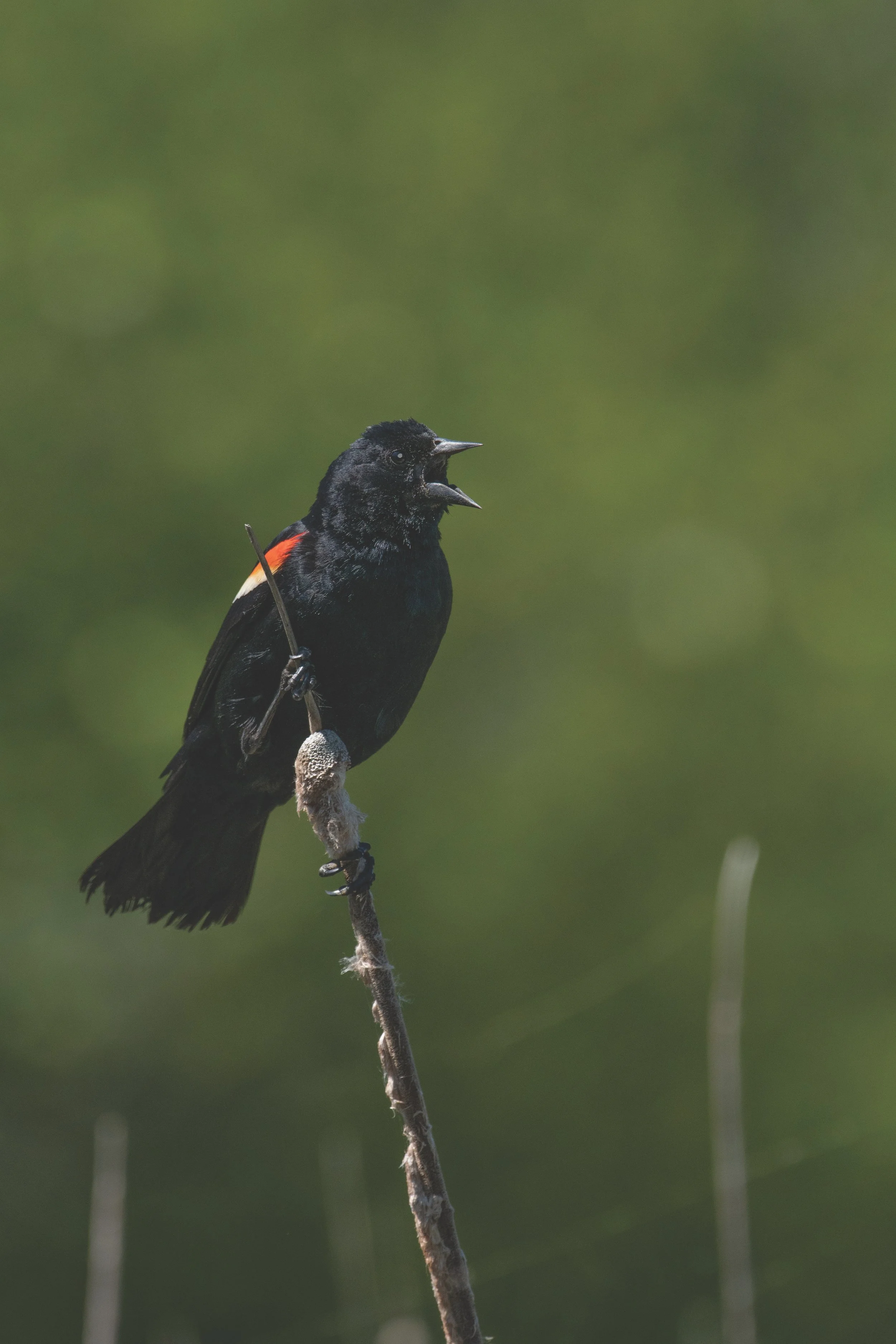
PHOTO: ROBIN JOWETT
Science has proven that when we listen to music, our brains release dopamine – a happy hormone. Other studies have confirmed that a walk in the woods relaxes and rejuvenates our bodies and minds. So, what better prescription could there be for your health and well-being than being serenaded by birdsong during a stroll in the greening spring forests.
Spring migration refills our forests with birds and their songs. From the dawn chorus to the dusk evensong, there’s sure to be music in the air for you to enjoy while reaping the benefits of the restorative powers of nature.
MUSIC LESSONS
In spring, the countryside comes alive again with the sound of birdsong. At no other time of year do birds sing so persistently, making spring a perfect time to tune your ears to the treetops and learn a birdsong or two. Each returning species arrives ready to rock out its best tunes to try to impress a female audience. Listen up and you will be impressed too.
BIRDING BY EAR
Experienced birders identify most of the species they encounter by their songs before they make a visual connection. Being able to identify a species by ear makes you much more aware of the avian diversity out there. Birdsong engages your ear, which alerts your eyes to birds that may be hidden from sight by distance, foliage or other features. And if you don’t have time to track the songster down visually, you can still have a feeling of satisfaction and accomplishment knowing what species is announcing its presence.
Learning individual birdsong can be challenging, but you can start off with already-familiar species that you are bound to hear frequently. When that first Robin appears in early spring, stop, look at it, and watch it sing. Actually seeing a bird sing helps imprint the bird to the song and connects it to your memory bank.
ONOMATOPOEIA
Another approach employed by some birders is the use of onomatopoeia, which is defined as the formation of a word from a sound associated with what it is named. Check out a number of species that have names that are based on their calls. Starting with some of these examples might get you on your way to learning a few new songs.
The omnipresent Black-capped Chickadee who calls out its name the year through, adding a “dee, dee, dee” to the end for extra emphasis!
The little Eastern Phoebe, who nests under the eaves of your shed, will quite emphatically call out its name through the day.
If you take a walk in the woods, your ears should soon pick up an Eastern Wood Pewee slowly and sweetly singing its name, throwing in an “a” between the pee and the wee – “pee-a-wee.”
There is even one songbird that starts singing after dusk – that nocturnal champion of all singers, the Eastern Whip-poor-will (Caprimulgus vociferous!), which repeats its name hundreds of times through the night in peak breeding season. You’ll never forget this song if you’re lucky enough to have a Whip-poor-will serenade you through the night!
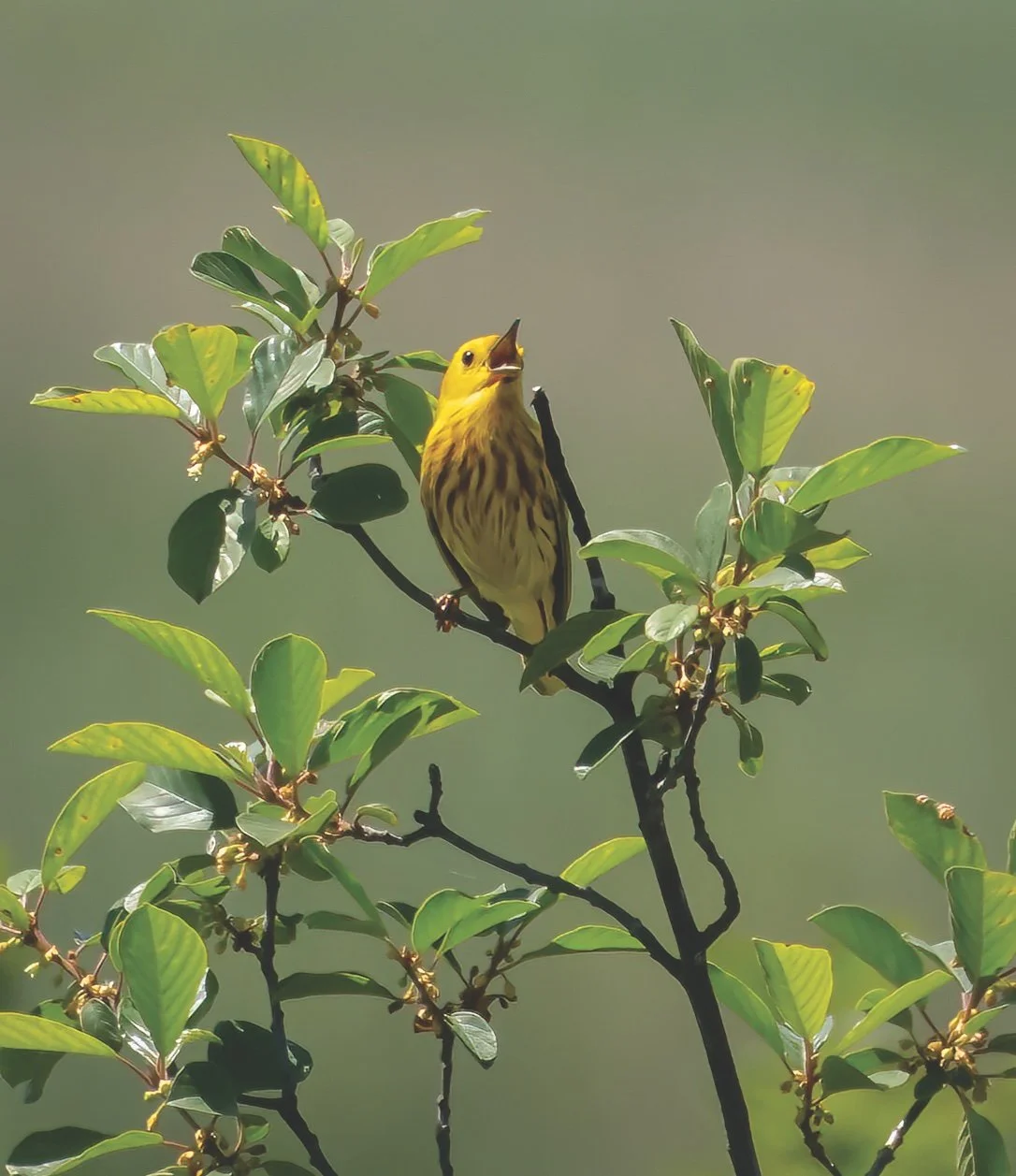
PHOTO: ROBIN JOWETT
MNEMONICS
Another trick to learning birdsong is the use of mnemonics. A mnemonic is a tool or a prompt, such as words or associations that assist in remembering something. Many birders use mnemonics to help them remember a birdsong. Look in any bird guide or app and you will often see songs described by what the bird seems to be saying.
The mournful Coo cooing of the Mourning Dove may be described as “boo hoo hoo hoo.”
The Grey Catbird sings a “meow” note.
The Red-eyed Vireo’s deliberate up-and-down song from the treetops are described as “Here I am, where are you; I’m up here, you’re down there.”
The iconic calls of the Common Loon are described as yodels, wails and laughs.
Everyone’s favourite seems to be the clear four-note whistles of the White-throated Sparrow which is interpreted as “Oh Can a da!”
THERE’S AN APP FOR THAT
Should these tricks of the trade not help tune up your ear, you can always try out some technology. There are apps that will record birdsong on your phone, then automagically identify the singer for you. Some even pop up a picture of the bird and will further link you to biographies on the bird. But even the app can get confused by any given song. It will often suggest a number of possibilities, any of which may or may not be accurate! However, the app can be a terrific aid in your pursuit of taking your ear-birding skills to the next level.
DAWN CHORUS
Once you get a handle on a few songs, get up and out early on a warm spring day to experience the dawn chorus. The dawn chorus is unique to the bird world and is one of the highlights of springtime! The chorus gains momentum as dawn breaks and soon becomes a symphony of birdsong. Once your ear is familiar with a few individual songs, listening to the chorus will be akin to listening to a symphony where you start to recognize the sounds of each instrument as the music moves through its repertoire. The thrush section warms up first, followed by the blackbirds, the wrens, the flycatchers and warblers and soon all species are adding to the morning concert. Recognizing each species as it joins in makes for a magical morning!
EVENSONG
If you are not an early bird yourself, you can check out an encore chorus performance at dusk. It is a more subdued version of the dawn chorus with fewer species joining in, but perhaps a better time to practise your birding by ear.
Birdsong is so evocative of springtime. Birding by ear adds to your already-satisfying birding by eye enjoyment of the return of birds to our countryside. Just get outside and listen for those songs of joy! OH