
Population Explosion
STORY LYNNE RICHARDSON | PHOTOGRAPHY ROBIN JOWETT
Have you noticed?
There’s a population explosion going on. It’s happening in your backyards, across the fields, deep in the forests and along the lakeshores. It has nothing to do with the winter’s pandemic lockdowns. It is simply part of the annual life cycle of the birds that have returned to our northern locales, to undertake their annual rituals of courting, nesting and raising their nestful of baby birds.
Birds arrive en masse during the migration month of May, often returning to the same neighbourhood they were raised in only a year or two before. They waste no time in getting down to the business of reproduction. They’ve travelled hundreds of miles to get to our backyards, with their bounty of bugs, which are emerging in huge eruptions, with timing that coincides with baby birds hatching out of their shells.
DAWN CHORUS
Male songbirds (perching birds) arrive first, a week or more ahead of the females. They use this time wisely, checking out potential nest sites for her to choose from. They quickly claim a territory and proceed to determinedly announce their dominion over it in full song. They find a favourite singing perch, often near the tip of a tree or shrub so their song carries through the open air. They start singing at dawn when the clear morning air also helps project their song. Get up at five in the early summertime, go to the woods and immerse yourself in their dawn chorus. Nature’s symphony.
FEATHERING THE NEST
When the females arrive, their future suitors are ready and waiting for them, each enticing them into their territory with their finest songs and unique courtship displays, showing off their flight moves and displaying their fancy breeding plumage. Who can resist! Pair-bonds are quickly formed.
Nesting starts within a week or two after the birds find each other and pair up. The breeding season is short, especially if the pair want to raise more than one brood in the season, which increases the odds of baby bird survival and the replenishment of the species. Nest building begins in earnest, usually by the female, but frequently with help from the male. The simpler nests (Mourning Doves) take little more than a day or two to build; more intricate nests (Robin, Baltimore Oriole), a week or two.
HATCHLINGS
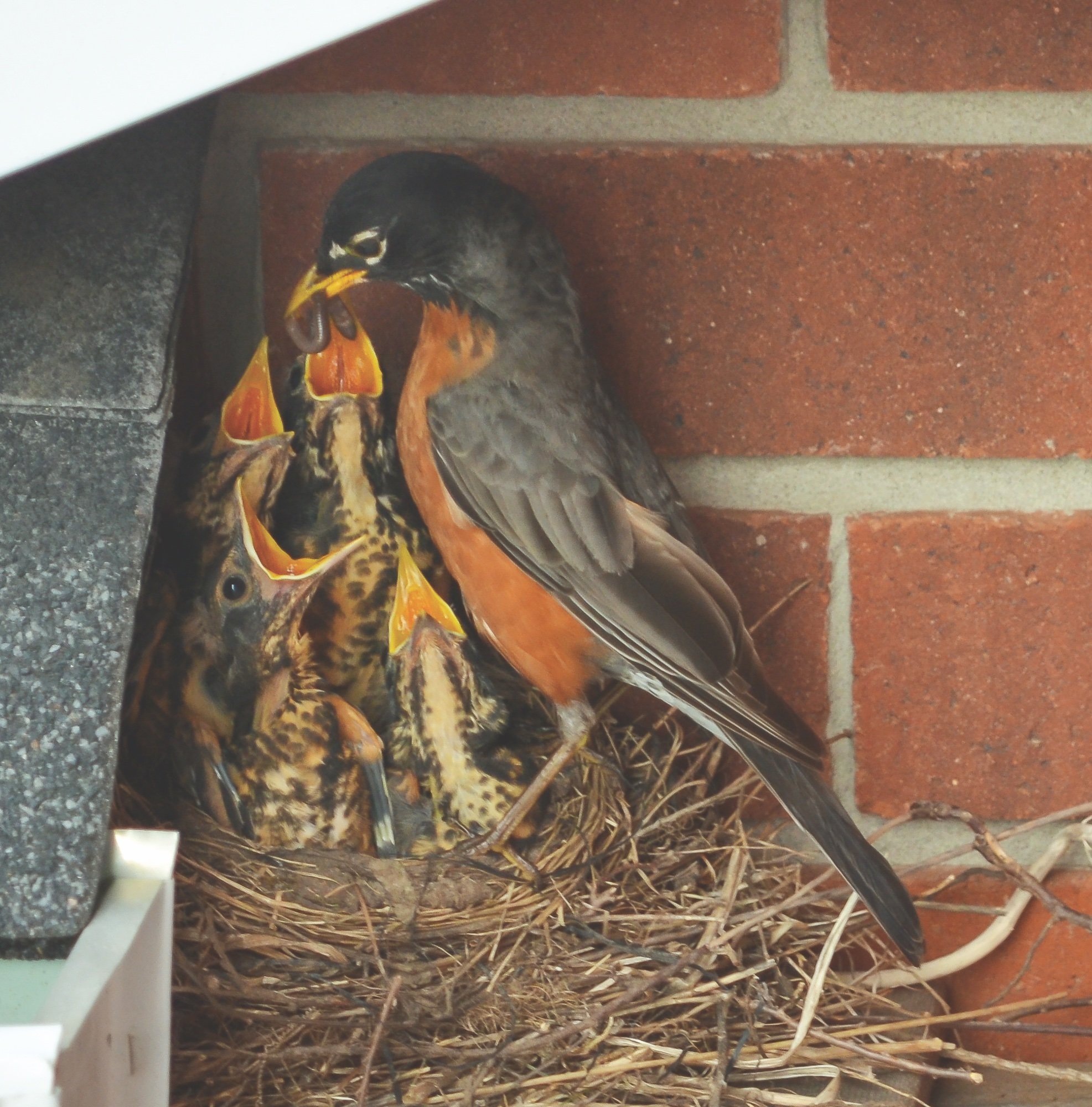
Eggs are laid and incubation ensues. Depending on the species, songbird incubation ranges from 10 to 20 days or so; quite a feat of fast work! Baby songbirds crack the eggs with a wee egg tooth, come out of their shells and face the world naked – featherless, helpless and not particularly cute! They can barely raise their bobbling heads and they struggle to open their baby beaks for the parent bird to stuff down a buggy protein snack. But this helpless-hatchling stage only lasts a quick three days or so.
NESTLINGS
By day four or so, the baby birds open their eyes, start sprouting feathers and the wee wings start growing out. They can hold their heads up steadily and compete with their sibling nestlings for the most bugs. The adults bring a constant supply of delectables to them from dawn to dusk, to satisfy their voracious appetites. The nestlings know the true meaning of “open wide” and their gapes are brightly coloured inside, giving the adults a big, bright target area to stuff breakfast down into.
FLEDGLINGS
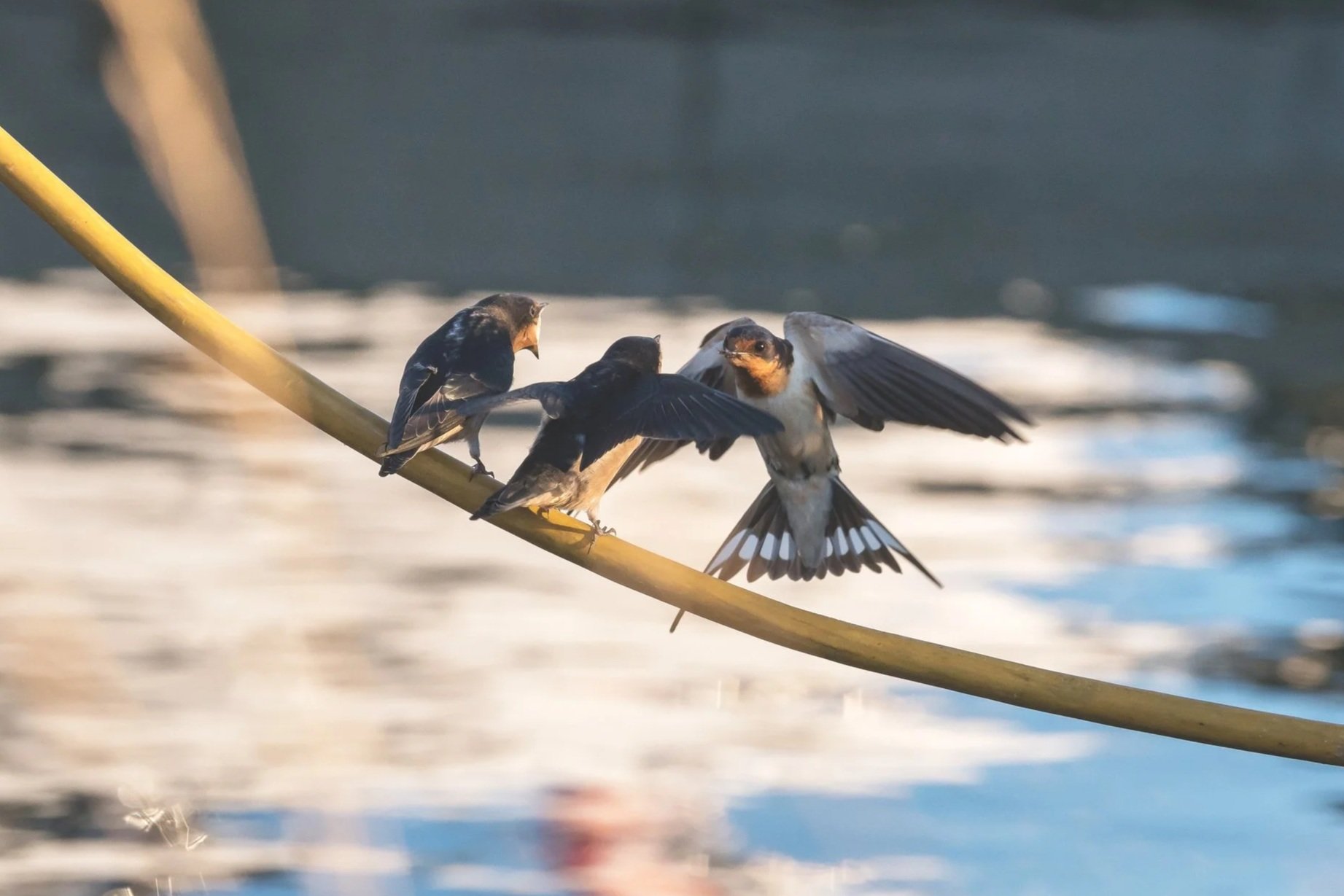
In two or three short weeks, many nestling songbirds have progressed from nestlings to fledglings – the point at which they can fly. They’ve grown quickly to full adult size. Their flight feathers have formed and they’re ready for takeoff. But first flights are often tricky. They may launch with vigour, but with no flying experience they may do a bit of a crash landing. And after such a landing, they may be reluctant to give it another try right away. This is when you are most likely to see baby robins, cardinals and other common backyard birds bobbing about your lawn, cowering under a shrub or sitting tightly together on a perch, looking abandoned and forlorn. Don’t let that fool you.
YOU’RE NOT MY MOM!
Resist the urge to rescue one of these lost-looking babies. They don’t need rescuing or human care. The parents are nearby, still actively feeding their scattered young while leaving them on their own for lengthening periods in an effort to encourage their full independence. Step back and observe the youngster to ensure it is okay and most importantly, give the parents a chance to show up. The fledglings still require their unique diet of a specific range of invertebrates to get them strong and airborne. Human-offered food is usually a poor substitute.
FLY, FLY AWAY
After a day or two of being grounded, parental care diminishes and it’s time for the fledglings to make their own way in the world. They may still be sporting some traces of their natal plumage – spots on robins’ breasts and the odd wayward downy feather poking out of their otherwise sleek coat of feathers, but these now-juvenile birds are babies no more. They fly off and fend for themselves for the rest of the summer, building their strength for their fall migration and their own continuing cycle of life. OH