
The Birds Of Summer
STORY LYNNE RICHARDSON PHOTOGRAPHY NIGEL EVES & DALE DARCY
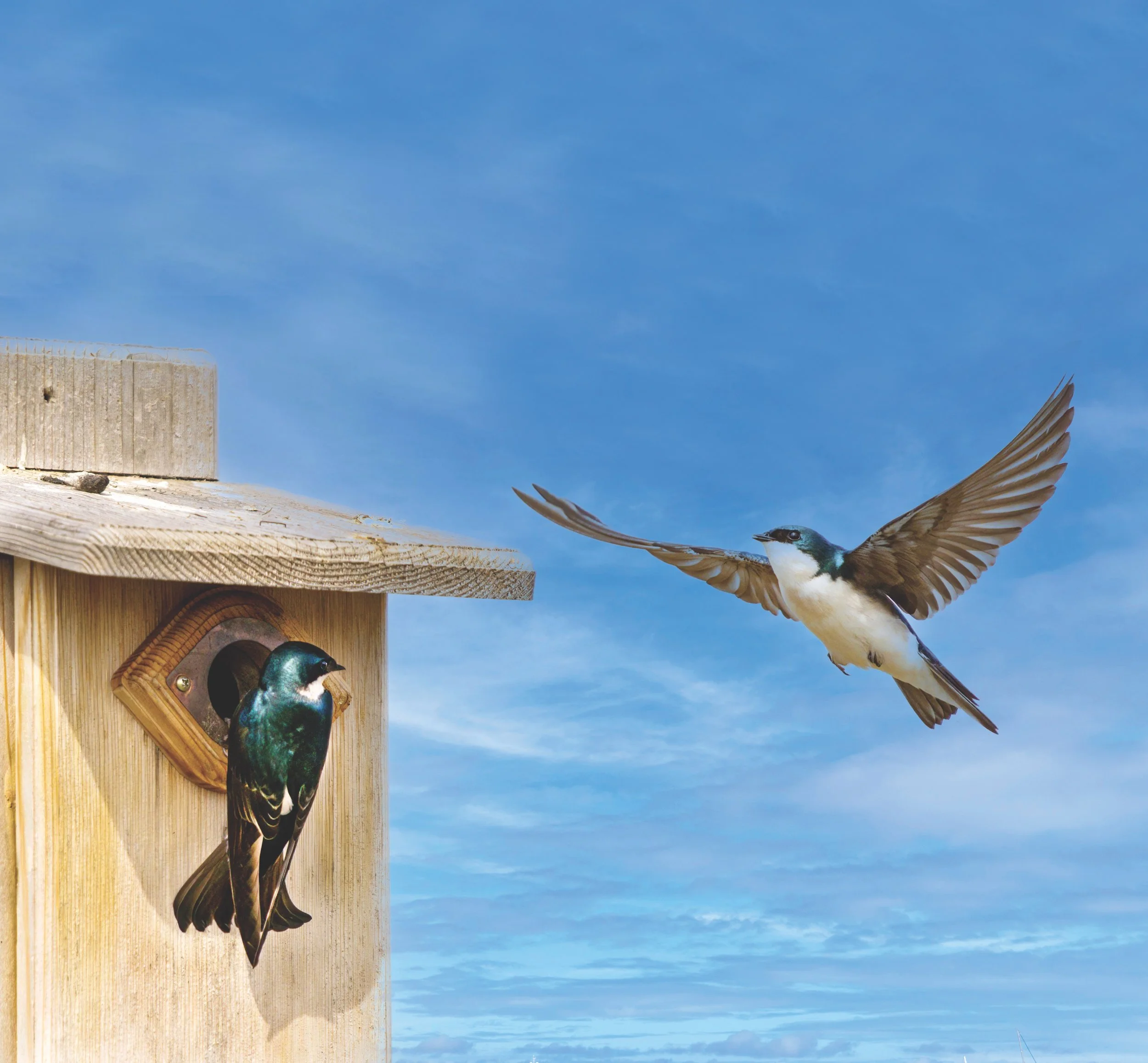
Tree swallows
With the onset of lengthening days and warmer temperatures, many OUR HOMES readers will be familiar with the urge to change up winter clothes and comforters and feather their nest with fresh décor for the fine weather ahead. It’s something we have in common with the avian migrants that have just returned to our backyards, fields, forests and lakes – the birds have transformed their drab winter wear into fresh and colourful spring wardrobes. Once winter settles into spring, thoughts turn to summer construction season, for humans and birds alike.
MASTER BUILDERS
From hummingbirds, the original “tiny house” builders, to osprey and eagles with their palatial lakeside and rural homes, birds are master architects and master builders. Much of this construction gets underway right in your own backyard. If you want to expand your knowledge of bird biology you can be the local bird building inspector! A typical property with established trees, shrubs and gardens could easily be home to up to 10 different species of birds, all working on their nest projects. It can be a fascinating deck-chair study to see just how many species are exercising squatter’s rights on your property for the season.
MASTER ARCHITECTS
Each bird builds its nest with an architectural style unique to their particular species. Each style perfectly suits the species’ needs. Exuberant house wrens are easily attracted to bird boxes and will stuff it high with fine twigs. Occasionally a sweet little chickadee will use the birdhouse and fill it with only the softest quality materials. In more rural settings the bluebird of happiness will gladly occupy a bird box, as will the tree swallow, which will swoop by with incomparable grace. Chirping sparrows, with their jaunty red caps and sporty white eyeliner, and serenading song sparrows will seek shelter in lower, thicker shrubberies, lining their tightly spun fine grass cups with cosy hair or fur linings. Mourning doves are not famous for their nest-building abilities – a few twigs laid on a supporting spruce branch will do. The ubiquitous robin will build its sturdy, mud-lined grass nest on almost any tree branch or ledge. Eastern phoebes will construct their lovely, moss-covered nests under an eave, often on a light fixture – if a robin doesn’t get there first. Cardinals and blue jays will hide their rather large but loose twig nests deep in your cedar hedge. Brilliant Baltimore orioles, master architects, will hang their intricately woven deep pouch nests from the outer branches of tall backyard trees. Meanwhile, goldfinches will wait until later in the summer when thistledown is available to line their lovely nest beds. Depending on your location, numerous other species may be busy at work in quiet corners of your yard as well.
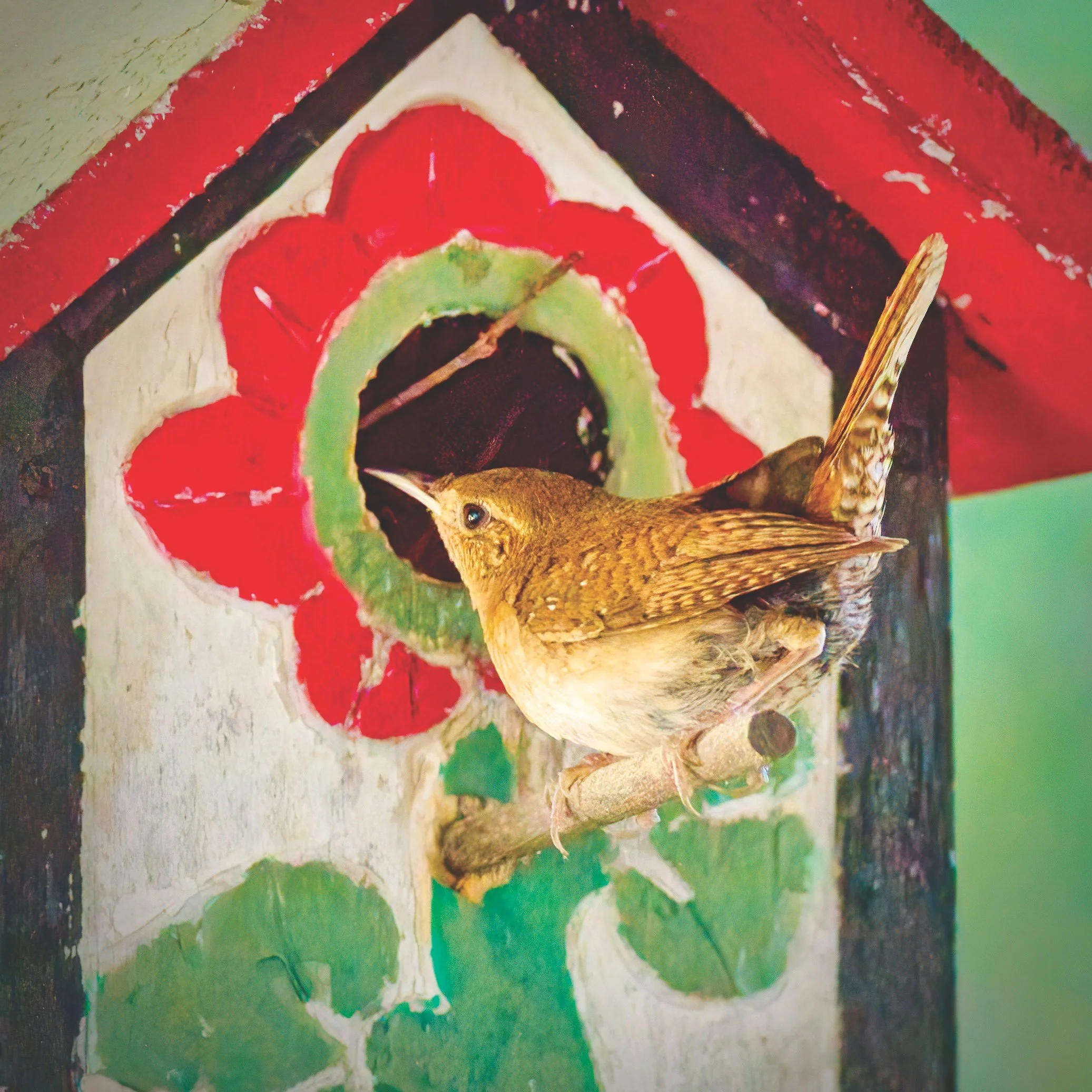
House wren
AN ABUNDANCE OF BIRDS
Discovering this hidden activity can open your eyes to the secret life of birds. Birds are the most apparent form of wildlife you will encounter. Just think, you might see a few mammals in your yard once in a while, but it’s possible to see dozens upon dozens of different bird species migrating through or stopping to nest from time to time. To give you an idea of the possibilities: I’ve documented 292 different species in, flying over, or seen from my yard alone! Obviously, there’s a lot of time involved staring out the windows, but it’s time well spent, considering the interest and entertainment songbirds bring.
DO NOT DISTURB
While observing nests and watching hatchlings grow on their bellies full of bugs (gleaned from your yard as a free pesticide service) can be exciting, always be mindful of the Code of Birding Ethics – the welfare of the birds and their habitats come first! Do Not Disturb! Resist the urge to get up close and personal. If adult birds become agitated, back off. Some birds such as red-winged blackbirds and the elegant barn swallow are not afraid to take you on with all of their 50 grams of heft behind them.
Finally, while you’re enjoying your new-found feathered friends, perhaps think a bit about how you can give back to them. Incorporate native trees, shrubs and flowers in your landscaping plans. Native species provide a much greater abundance of higher-quality natural food sources birds require. Hang a hummingbird feeder, put out oranges for orioles, nuts for the nuthatches and sunflower seeds for almost all others. And sit back and enjoy! OH