
Just Ducky
STORY LYNNE RICHARDSON
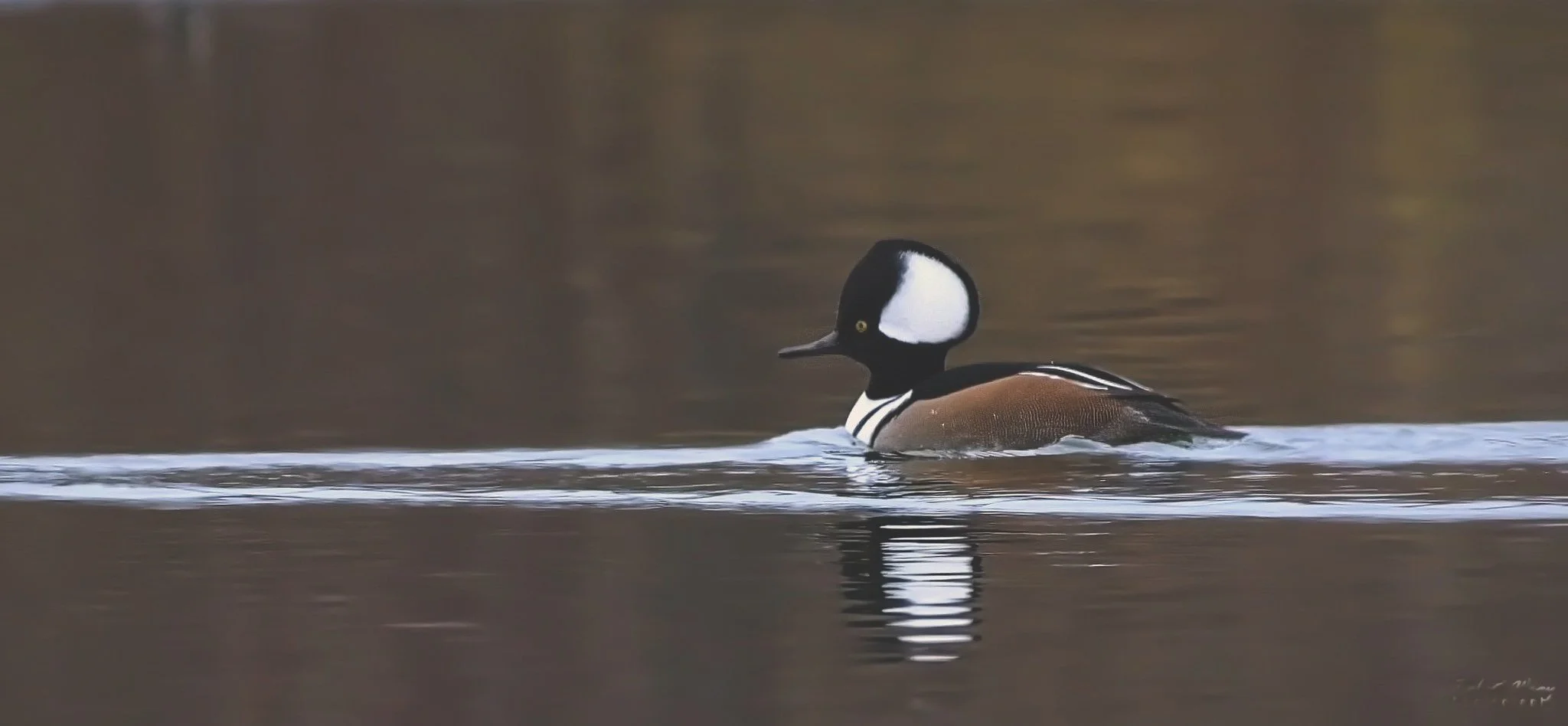
PHOTO: ROB WRAY
DUCKS UNLIMITED
There are about 30 species of ducks in North America, with 25 or so found in Ontario. This family of birds is at home on the water, in the air, and many of them, on land as well. But water is their main domain. They have completely waterproof flight and outer feathers that keep their downy undercoat warm and dry. They are sociable, gregarious birds who flock together for good parts of the year, often in large “rafts” out on the open water.
Ducks are a widespread family of birds, perhaps somewhat over-represented by the ubiquitous Mallard. Mallards are indeed the world’s most abundant duck and are universally well known for hanging out at local parks everywhere, readily swimming up for handouts. The Mallard drake is quite a dapper fellow, as are the drakes of many other duck species. Because ducks have distinct colour patterns and are relatively large birds, they can be clearly observed in open water, and they often stay in one spot for lengths of time (unlike say, warblers). Ducks are a relatively easy study in identification. You can linger over them, studying for identification.
A BIT OF BACKGROUND
Ducks are around in all four seasons, which is a great bonus with duck-watching. Ducks are among the first family of birds to greet us in the spring. They parade their adorable ducklings past our shorelines throughout the summer. They cheer up the dreary days of fall as they stage into large rafts before migration, and a whole new crew of hardy boreal and arctic breeders arrive to southern Ontario to overwinter with us.
They perform entertaining courtship displays, form their pair bonds during migration and they arrive already pair bonded.
The drakes of each species have fairly distinct and rather bold patterns of plumage, which makes for ease of identity. For starters, it’s good to know that the majority of our ducks fall into two distinct anatomical forms – dabblers and divers.
It’s also good to know some tips on how to ID the drakes from the ducks, or “hens” as they’re sometimes called.
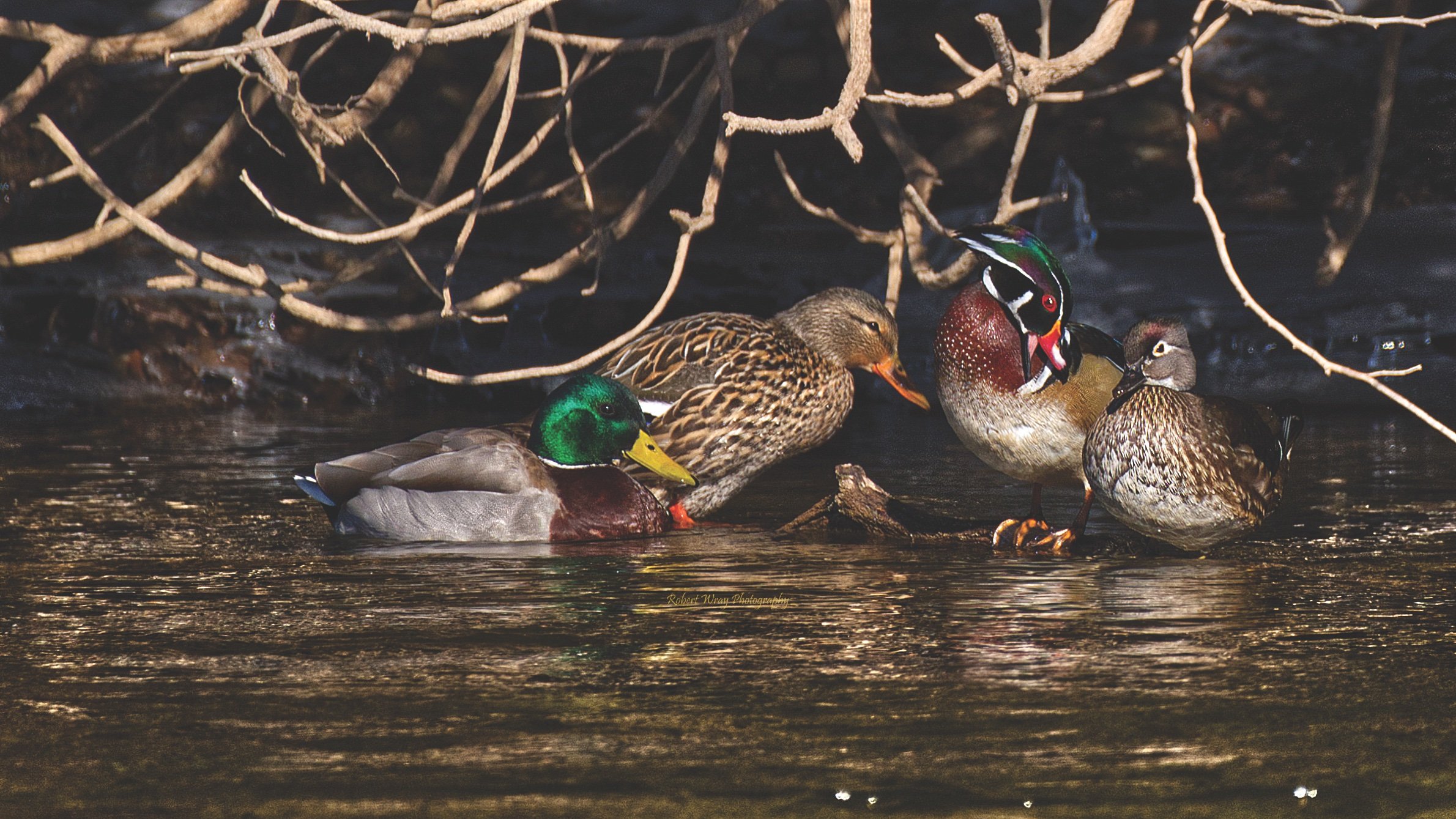
PHOTO: ROB WRAY
DUCK ID
DABBLERS
That ubiquitous Mallard is a typical dabbler type of duck. Dabblers are surface feeders and can walk on land, due to their legs and feet being centred on their body. This structure does not lend itself to underwater swimming. Dabblers are the classic “bottoms up” feeders – tipping their heads into the water – bottoms up in the air – to graze on shallow water aquatic vegetation and insects, including worms and snails. They can also walk up onto shore and graze on grasses and the occasional human handout (corn, birdseed; no bread please!). Dabblers take off straight into the air due to their larger winged structure.
DIVERS
Divers dive rather than dabble for their food. Their legs are set further back on their body, giving them a streamlined underwater profile and aid in their underwater propulsion. Their feet are bigger than dabbler duck feet and propel them along underwater. They are awkward on land and come ashore only to nest or rest.
DRAKES
Male ducks or drakes are generally a very handsome lot, distinctively patterned, coloured and fairly easy to distinguish one species from another.
HENS
Most hen ducks look nothing like their dapper male counterparts. Ducks are “sexually dimorphic,” which is the appearance of one species in two distinct forms. Nature leaves the females cryptically coloured so they are camouflaged from predators, a bonus during the sensitive nesting season. But this can make female duck ID a tricky business. However, to help out with this, there is a saying amongst birders that if you want to ID a female duck, just look at the male she’s swimming with! Ducks pair up early, over the winter and in migration, and arrive in our area already mated. You almost always see a male and a female together in their pair bond. ID the male and you’ve got a 99 per cent chance that his female friend is his mate and the same species.
THE MOULT
But even this isn’t 100 per cent effective as ducks undergo a moult after the breeding season. The dapper drake wears a drab “eclipse” plumage for a month or more that is very similar to the females. Now, this makes ID of both males and females challenging. However, as this moult renders the ducks flightless, they remain secretive and out of sight, so chances are you won’t see many ducks during this cryptic phase anyway. Whew!
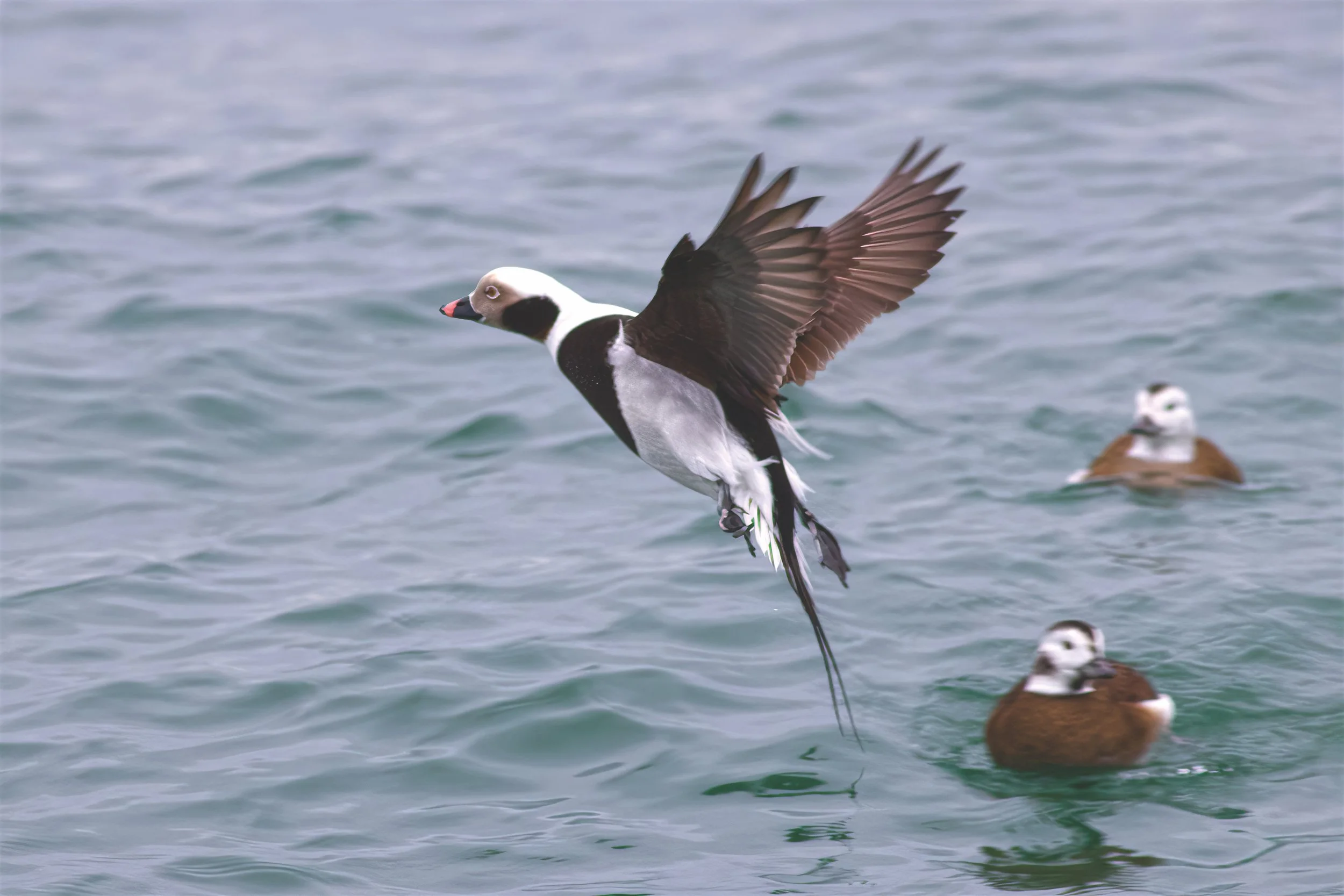
PHOTO: NIGEL EVES
JUST DUCKY IDIOMS
Ducks have long been associated with quite a range of familiar phrases. Why have ducks generated so many idioms? Ducks don’t sing, they aren’t particularly noted for any peculiar or unusual habits, and they lead fairly quiet lives out on the lakes and ponds. But they do have a cute waddle in their walk, their quack sounds like laughter, and their fluffy young are adorable. But that doesn’t explain it. A search for the origin of these idioms comes up with a lot of “origin unknowns.” However, the sayings have been around for a long time and are hugely expressive, so let’s get quacking and have a look at some of them.
Yes, you may be a lucky duck, an odd duck, a sitting duck, a lame duck or a dead duck. You can let a problem slide like water off a duck’s back, you can take to a task like a duck to water or you can get out your umbrella when it’s good weather for ducks. There’s the ever-popular “bottoms up” toast, and the helpful “duck” or “duck down” warnings! And of course, we can’t forget the timeless advice to get your ducks in a row. Aren’t these sayings just ducky? Do any of them quack you up? Lord love a duck, that’s a lot of expressions! Duck soup.
There’s even the famous “duck test” quoted above – If it walks like a duck, talks like a duck, swims like a duck – it’s a duck! This common phrase has its origins in philosophy. The test suggests that, logically, it can be inferred that a most likely conclusion can be deduced from simple observations. But it’s not an infallible test. Various other waterfowl such as loons, grebes and coots are often mistaken for ducks! But that is another story for another time. Time to duck out! OH