
Home Sweet Home
STORY LYNNE RICHARDSON
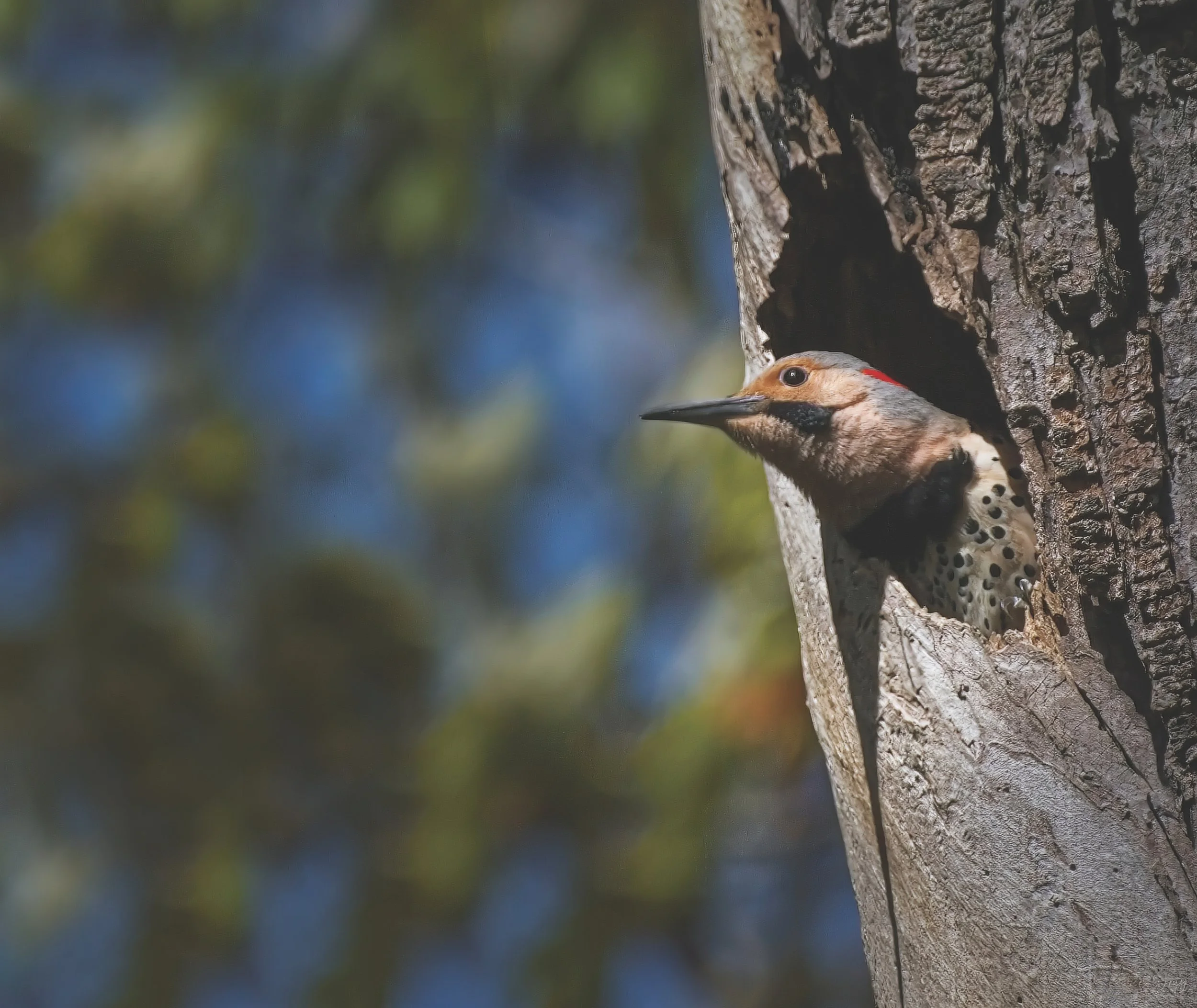
NORTHER FLICKER
NESTS
When you think of a songbird’s nest, what comes to mind? Perhaps it is the familiar robin’s nest – a neat woven cup of grasses cemented together with dabs of mud. This somewhat insulated nest cup is nature’s natural incubator, with the adult birds’ warm belly brood patch being the heat source.
With about 300 breeding bird species in Ontario, there are hundreds of variations in how cup nests are constructed. In fact, each nest is made precisely to the size, shape and style with nest-building materials unique to each individual bird species and identifiable to that species. The same is true of each species’ nesting habitats and sites, which are almost always diagnostic to the bird that built it. Nests are impressive feats of architecture, construction and site selection by sweet little birds using only their beaks and their tiny bird brains.
But despite most of our birds’ widespread use of the cup nest type, this unroofed housing model has its drawbacks. It is exposed to the elements and to sharp-eyed predators. Even when tucked deep into the branches of trees, shrubs, grasses and reeds, they’re not always warm, dry, safe or secure. So, not surprisingly, a range of birds has figured out a way, or evolved, to get around these challenges. Their preferred accommodation is in a hole or cavity of a tree.
NEW BUILDS
The master cavity builders of the bird world, as expected by their name and revealed by their big beaks, are the woodpecker family. From the diminutive downy to the crow-sized pileated, this family of nine Ontario woodpecker species has been in the new build business for a long time. With a specially evolved head structure endowed with excellent shock absorbers, they tap, chip and hammer away at trees, opening holes and excavating cavities for nesting and roosting. They’re master woodworkers.
HOUSE HUNTERS
These woodpecker holes house a family for a season or two, and then, for various reasons, they often move on to another tree. This leaves their abandoned home up for grabs for a variety of potential new tenants.
This is a good thing because, besides woodpeckers, a number of other species are also cavity nesters. Bluebirds, tree swallows, the ubiquitous house wrens, as well as increasingly larger species such as purple martins, great crested flycatchers, American kestrels, several species of ducks and a few species of owls are all in the market for an enclosed cavity for their nest site. However, these birds do not have the beak or the ability to excavate their own nest holes, so they have become the house hunters of the bird world. They go about the woods looking for vacant woodpecker holes. Abandoned downy diggings suit wrens nicely, while roomy pileated holes will suit a screech owl just fine. This symbiotic relationship creates a connected community of bird housing.
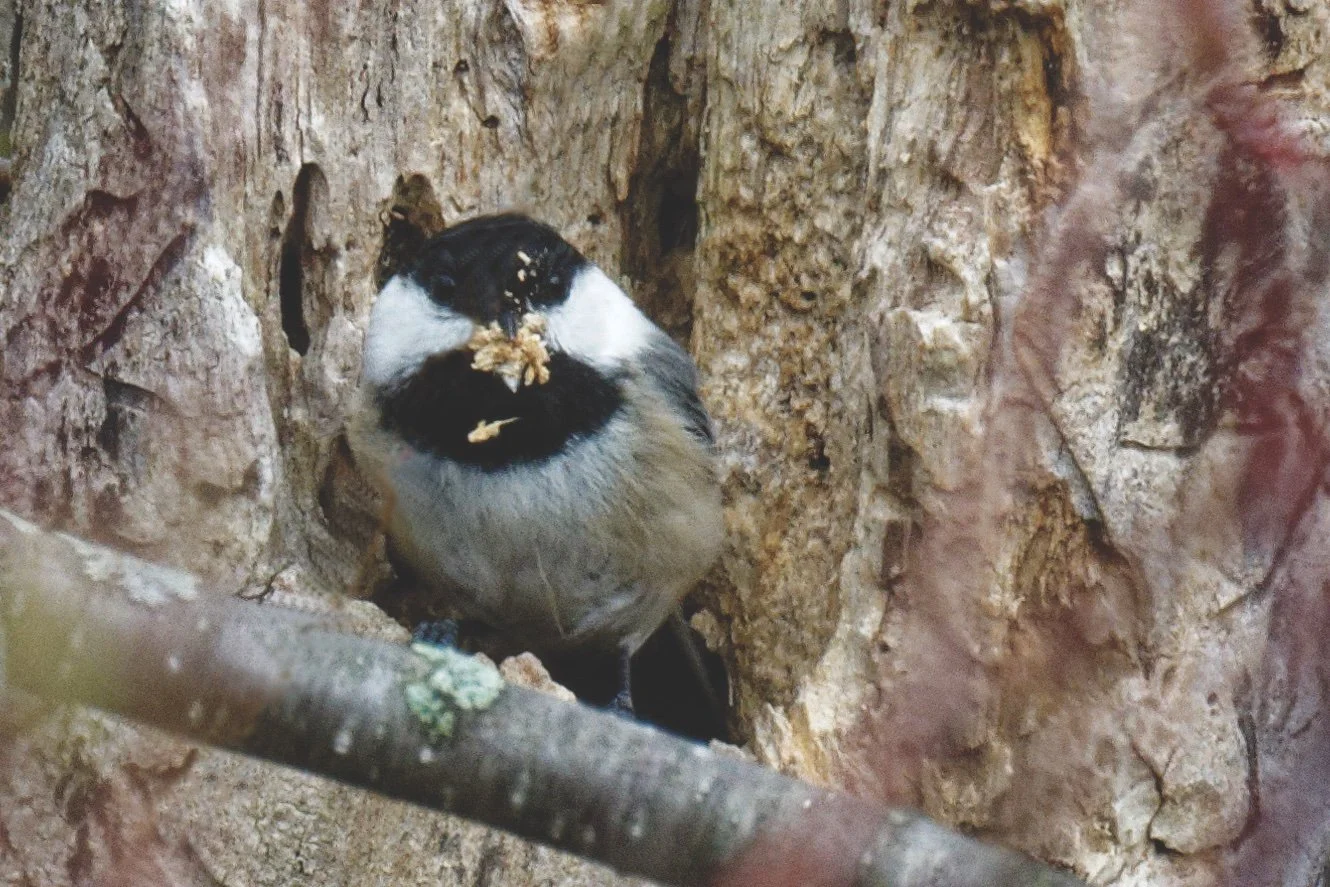
BLACK-CAPPED CHICKADEE. PHOTO: LUCIE DESJARDINS
FIXER UPPER
There are a few cavity nesters that can fix up their own site. Chickadees and nuthatches are such enterprising species. All they need is a dead or dying tree, with perhaps a popped-out knot hole and a soft, decaying interior.
They’ll take advantage of these run-down conditions and, in true fixer-upper fashion, gather the rotting wood chips with their weak little beaks and toss them out. Once these digs are dug out to their liking, they’ll start interior decorating with nesting materials like soft green mosses and fine dry grasses.
PREFABS
Despite all this industrious digging, there is still a housing crisis in the bird world. Even with woodpeckers providing new builds each year, the housing supply never quite keeps up with the demand. Inventory is always low. There are more cavity nesters than there are woodpeckers. Dead and dying trees are cut down by humans or eventually fall on their own, taking the nest sites with them. Competition is fierce, especially in preferred-habitat neighbourhoods, and many birds are outcompeted.
So, this is where humans can lend a helping hand. You can build a bird box. But build a better bird box. Properly constructed and placed, birdhouses can help fill the demand for good solid housing for cavity nesters. An incorrectly constructed box may lure our trusting feathered friends to their ultimate demise if they choose a box not built to their specifications. Their growing brood could suffer from crowded or poorly ventilated conditions or predation from an intruder who can access a too-large entry hole. Turns out there is a bird building code for each cavity nester’s house.
BUILDING CODE
A well-built bird box can provide a luxury home for birds if it is built to “code.” Nest boxes should be made from plans specific to the species using them. As with any good construction, proper structural design matters. Beware of the many cutesy birdhouses out there with their oversized nest holes and too-big or too-small boxes. Entrance hole diameters vary in size according to the species (one inch for a wren, two-and-a-quarter inches for a bluebird, etc.). They should be precise for the safety of the bird against intruders, including predators and bigger birds. And always lose the perch. Tree nest holes don’t have perches, and neither should your birdhouse. They actually impede the entry and exit of both the parent and the fledging young. Paint is optional but unnecessary and should be on the exterior only and be safe for animals. Most importantly, every bird box should be openable. They need to be cleaned out at the season’s end each fall. A box stuffed full of dusty old nesting material and perhaps bugs is not a healthy place for the next generation to move into. Regardless, it will not pass house inspection by the next potentially interested family. So, buy your bird boxes only from specialty stores or clubs that build them to proper specs, or build yours from plans from reputable websites! (Audubon, Nestwatch, Eastern Bluebird Society). And finally, pay attention to placement. The sites instructing you on building a better bird box will also tell you where to place the box, in what habitat, how high, how many, how close together, etc.
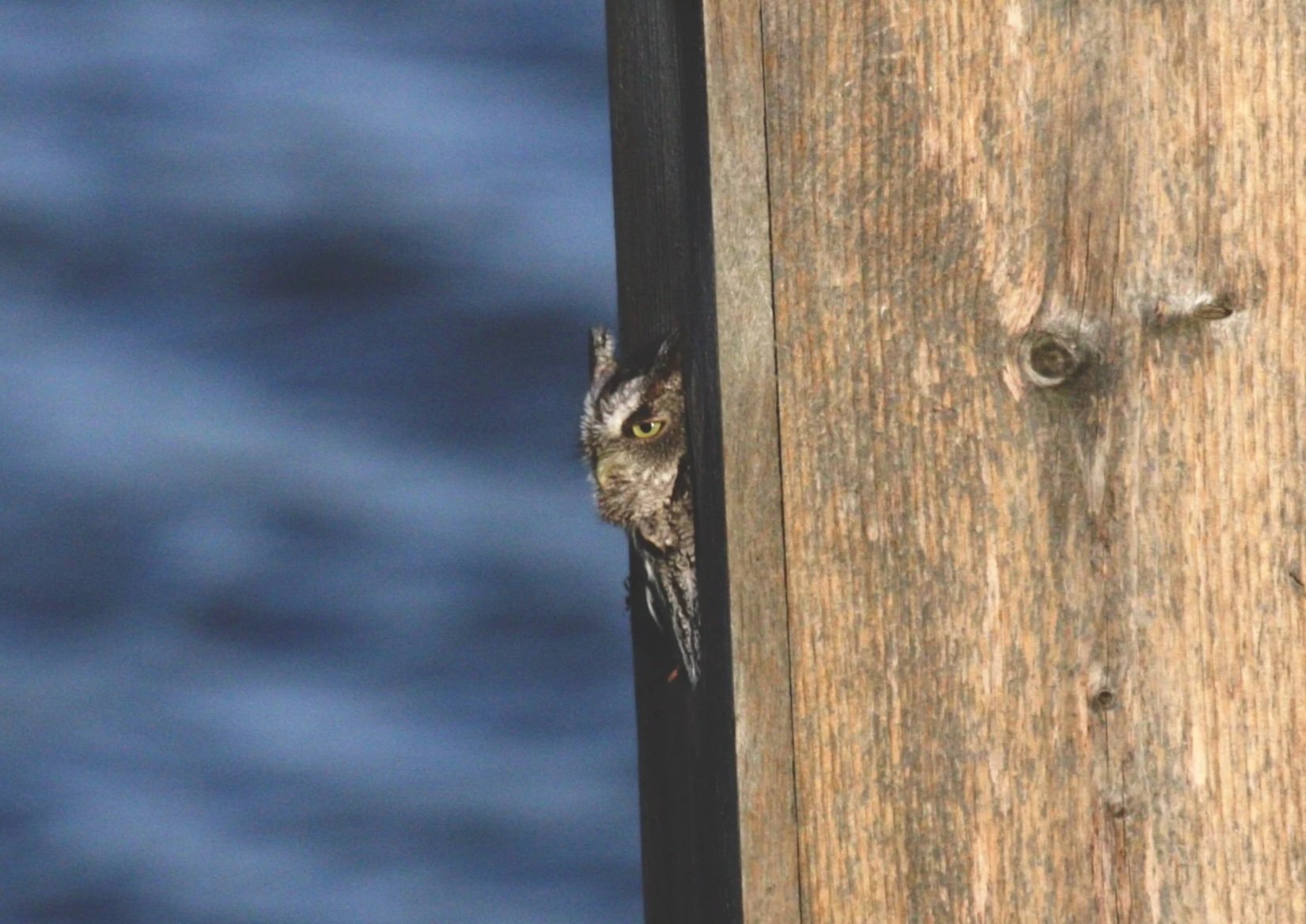
EASTERN SCREECH OWL. PHOTO: ROB KEARNS
CONDOS
Two more housing types deserve mention here. We have a few specialty builds in our mix of bird housing. The purple martin, our largest swallow, shows a strong preference – almost exclusive – for nesting in high-rise, condo-style housing. With their unique colonial style of nesting, they have adapted well to nesting in these condos. Lakeside property owners across southern Ontario have long been lending the unique purple martin a helping hand by erecting these substantial structures beside a lake or pond. Purple martins, acrobatic aerial insectivores, are welcome neighbours at homes and cottages for their voracious appetite for pesky bugs. But despite this attainable housing, a purple martin’s range is shrinking quickly in Ontario. Consider yourself lucky if you are still host to a colony.
HAPPY TRAILS
Finally, there is a success story to talk about. The brilliant blue eastern bluebird was once seriously declining across most of its range due to a lack of nest cavity sites. The formation of the North American Bluebird Society in the 1970s contributed to a successful rebound of its numbers by encouraging thousands of individuals and groups across North America to put up bluebird-specific nestboxes. These boxes were placed along roadside fences adjacent to farm pasture lands – the birds’ preferred habitat – sometimes forming lengthy trails of boxes down the roads. These trails are largely credited with bringing the beautiful “bluebird of happiness” back to our rural landscapes.
COMMUNITIES
There we have it, an entire range and style of homes for nesting birds throughout our own towns and countryside. Whether they be soft woven cups tucked under tree branches and leaves, in holes hammered out courtesy of the woodpecker family, in nestboxes, condos or trails put up by helpful humans, they form a great housing community of birds. OH