
Feed Your Caterpillars
STORY TERESA MATAMOROS
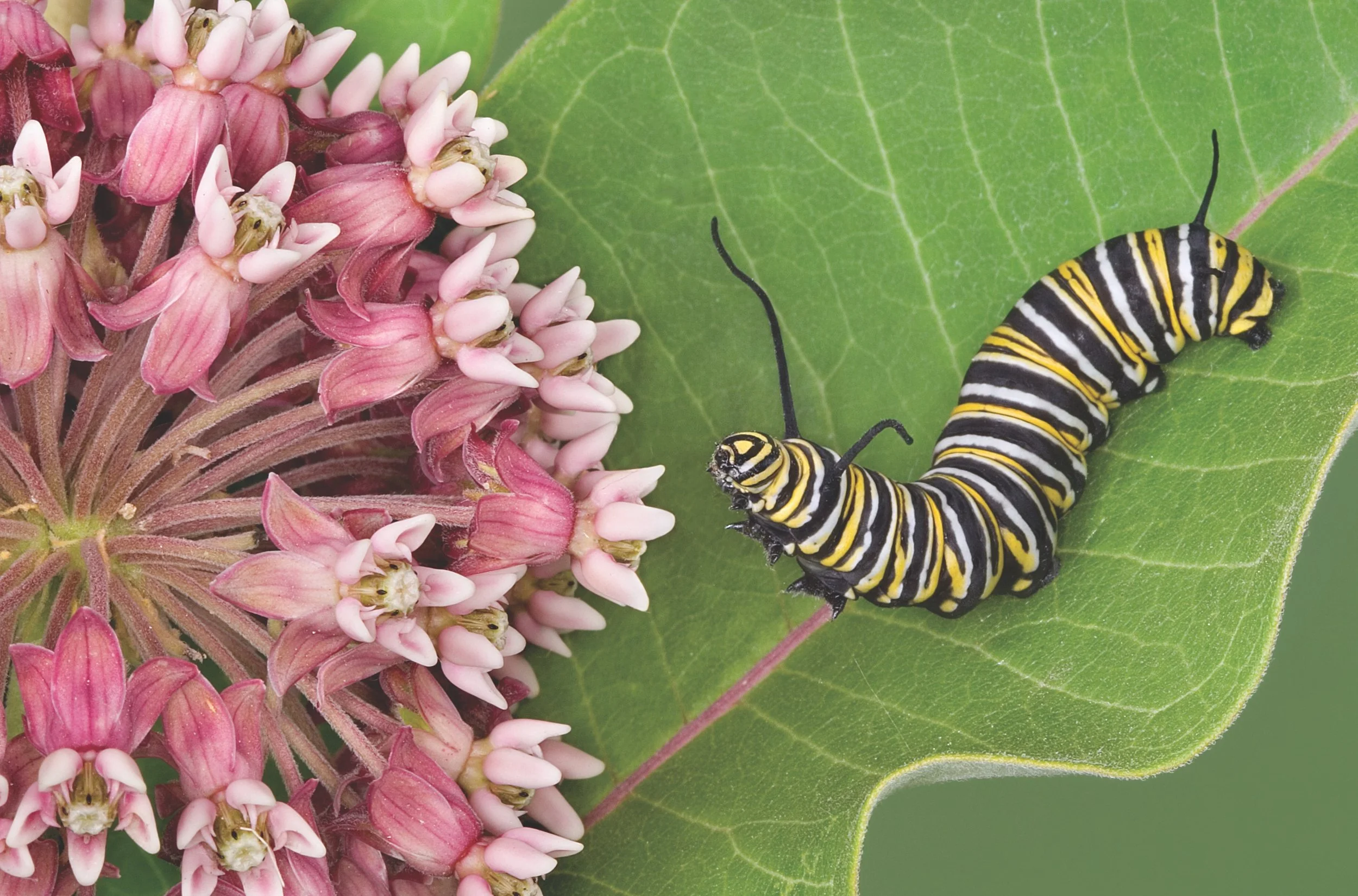
Monarch Caterpillar on Milkweed
There has been a lot of news recently about planting gardens that attract adult pollinators such as birds, bees, butterflies and flies. By cultivating gardens rich in flowers, shrubs and trees – preferably native species – we contribute to environmental well-being, support our food sources and create habitats for local flora and fauna. This effort helps maintain balance and biodiversity in our own little pieces of paradise.
However, to truly support pollinators, we must go beyond attracting adults and consider the entire life cycle, from egg to larvae to butterfly or moth. Creating habitats conducive to the metamorphosis process is essential with specific plants that serve as egg-laying sites, larval food sources and pupation sites.
What can we do? Firstly, we need to shift our attitude towards having caterpillars in the garden. Caterpillars are the main source of food for many birds. The loss of natural habitats poses a genuine threat to pollinator survival, making the creation of pollinator-friendly environments crucial.
Here are some features that can enhance pollinator habitat:
ALLOWING A WILD CORNER
Dedicate a small corner of your garden to go “wild.” This will provide a starting point for pollinators to enter and thrive. Another word for this is naturalization – when you take up part of your lawn to grow native plants. To be clear, this isn’t abandonment. Some caretaking is still needed.
DIVERSE NATIVE PLANTS
Incorporate diverse collections of native flowering plants – trees, shrubs and perennials – to ensure a continuous supply of nectar and pollen throughout the growing season.
NESTING OPPORTUNITIES
Create diverse locations for ground-nesting and wood-nesting pollinators, including areas with discarded vegetation and rotting logs for constructing nests. A lot of caterpillars pupate in the ground, so keep areas under trees open with groundcovers so soils are not compacted. Leaf litter left over the winter is gold for caterpillars and garden beds.
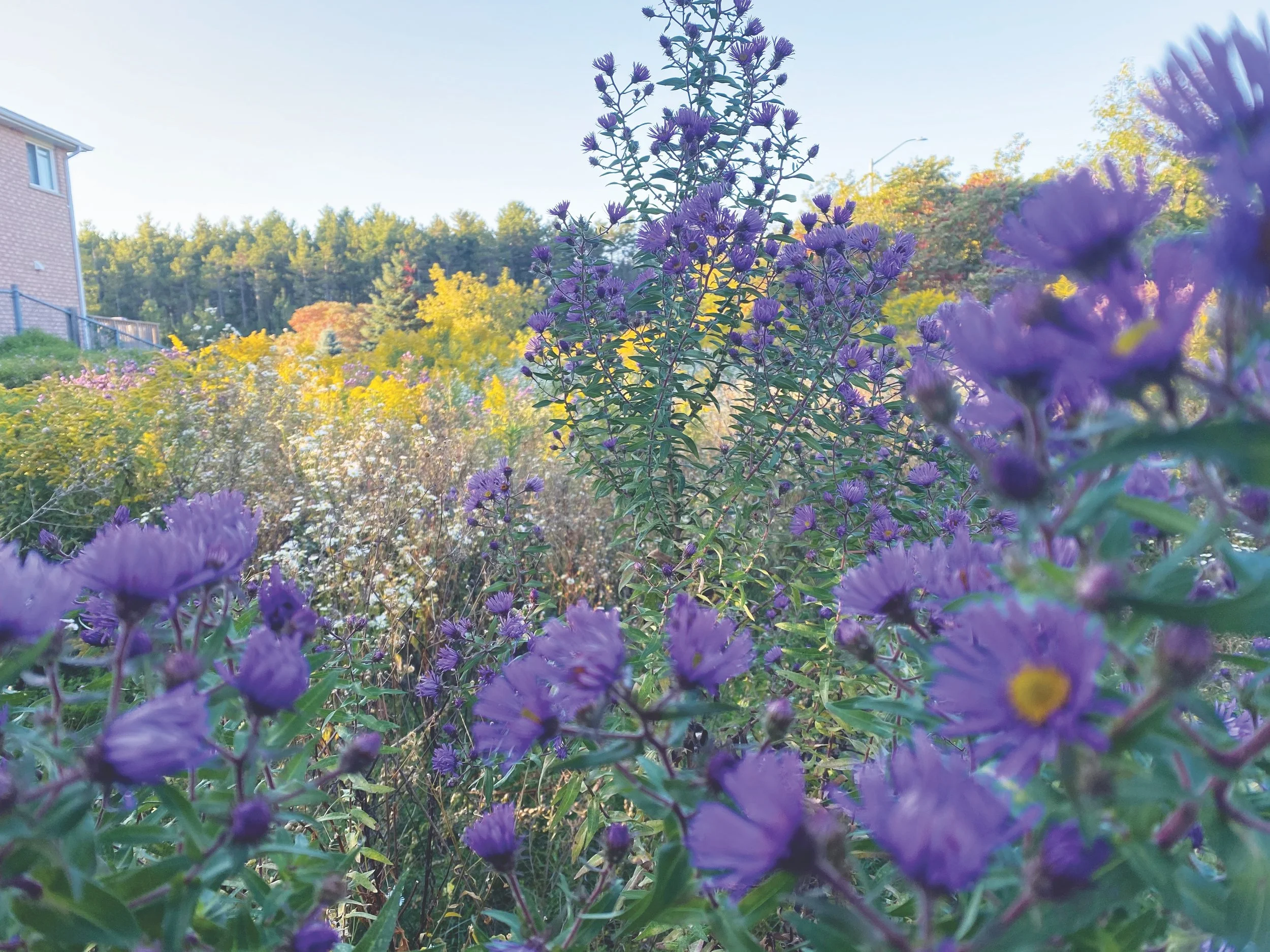
New England Aster
PROMINENT PLANTS FOR POLLINATOR LARVAE
Milkweed for Monarchs.
Columbine (Aquilegia canadensis) is a larval host for the Columbine Dusky Wing butterfly.
New England Aster (Aster novae-angliae) is a larval host for the Silvery Checkerspot butterfly.
Purple Coneflower (Echinacea purpurea) is a larval host for the Painted Lady butterfly.
Golden Alexanders (Zizia aurea) and parsley are larval hosts for the Black Swallow Tail butterfly.
Big Bluestem (Andropogon gerardii) and Little Bluestem (Schizachyrium) is a larval host for the Arctic Skipper and the Little Wood Satyr butterflies.
Hackberry Tree (Celtis occidentalis) is a larval host for the Snout Butterfly and the Question Mark butterfly.
Oaks (Quercus). This genus of tree is home to hundreds of different types of caterpillars. It’s a major player for food for the pollinators. Everyone needs an oak on their property!
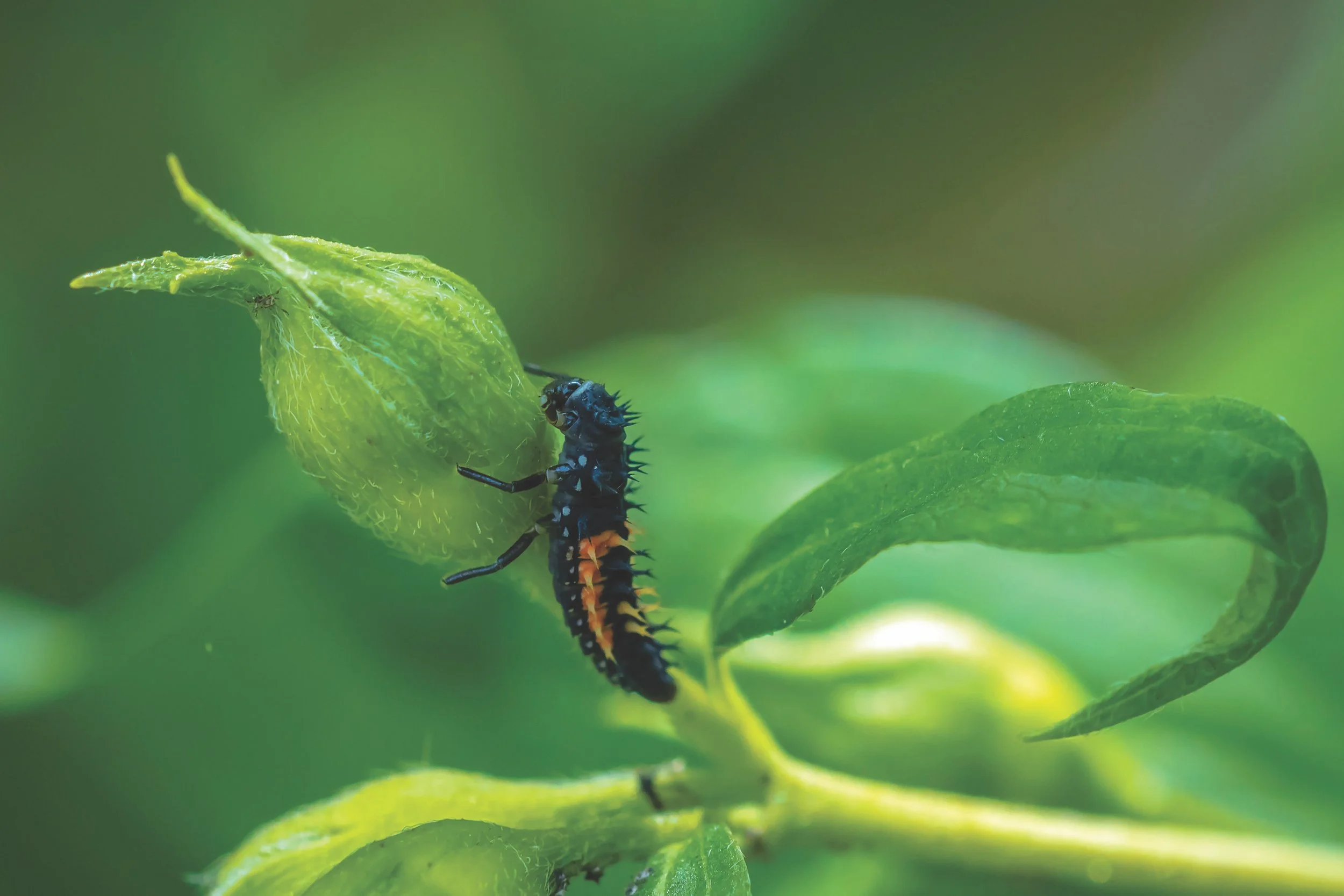
Ladybug Larvae
AVOID CHEMICAL PESTICIDES
Now that you have all these amazing caterpillars feeding in your garden, I think it goes without saying – make sure you don’t use any kind of chemical pesticides.
PLANT CLUSTERS AND AVOID OVER-CLEANING
Plant the pollinator-friendly plants in clusters rather than singly and avoid excessive garden cleanup to provide suitable overwintering spots for pupae.
ATTRACTING OTHER BENEFICIAL INSECTS
A pollinator-friendly garden may attract additional beneficial insects that don’t have caterpillars as a larval stage, including ladybird beetles, dragonflies, sweat bees and honeybees. Moths do have caterpillars and remember to keep outdoor lights off at night to avoid harming nocturnal moths.
Supporting the larvae of pollinators is a collective responsibility that significantly impacts ecosystems and agricultural landscapes. Nurturing these essential life stages ensures the continued success of pollinators, benefiting the environment, agriculture and the overall well-being of all living organisms, including humans. OH
Teresa Matamoros has a Bachelor of Science degree, an Ontario Diploma in Horticulture and is an ISA Certified Arborist.