
Composting
STORY MELANIE REKOLA
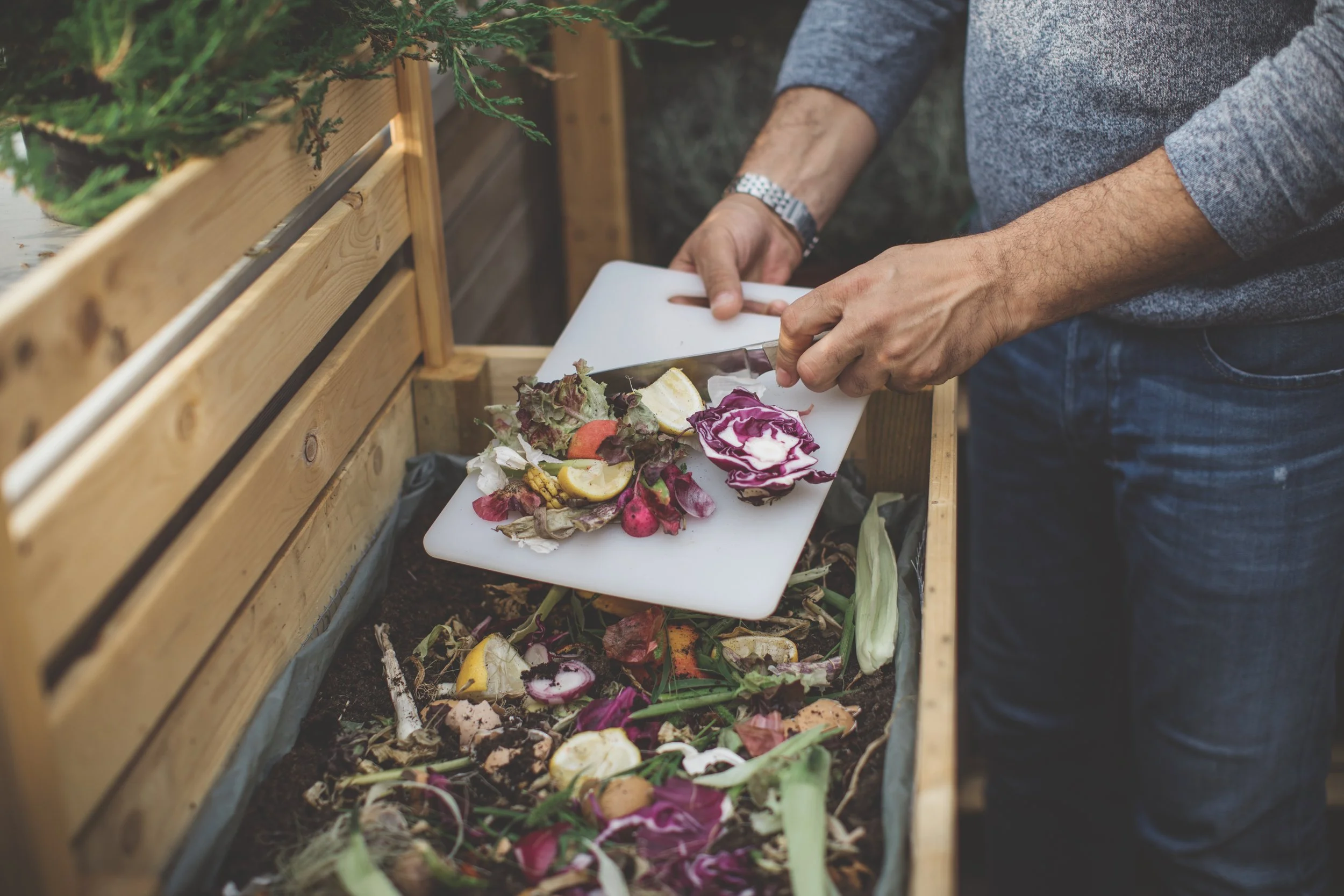
Composting is perhaps not the most elegant of subject matters. The word may conjure a messy, stinky, high-maintenance process, but it doesn’t have to be so. Composting can be very gratifying and it certainly has a role to play in supporting a beautiful garden, a strong body and a healthy planet, too.
Compost is your veggie and flower gardens’ best friend. Imagine the magic of creating the best, healthy soil conditioner through a natural and free process designed by Mother Nature herself! The key is to support the many responsible microbes. Much like our own microbiome, a host of tiny life forms allow plant life to absorb an optimum amount of soil nutrients.
Composting has an enormous impact on your carbon footprint. The average reduction is 663 pounds of carbon per person, per year, which is more than two average sized backyards full of trees. It also cuts your garbage by almost half.
It doesn’t have to be complicated. Anyone can compost, regardless of living situation – even condo and apartment dwellers. The fundamental start to any composting is combining carbon-rich materials called browns with high-nitrogen greens. Browns rot more slowly and are usually woody or fibrous, such as paper, nut shells, dry leaves and twigs. Greens rot fairly fast and are typically moist, such as fruit and veggie scraps, coffee grounds and any fresh, green leaves. Green and browns should be layered equally to create an optimum composting environment. But even if your quantities aren’t perfect, the material will compost eventually. By adding your brown layer last you’ll help cut down on odours and flies.
There are quite a few ways to compost, with varying degrees of complexity, but the basic methods are:
1. Use a typical outdoor compost tumbler or pile method (if you have the room)
Yes, they are not attractive but they do the job. Alternate green and brown layers and tumble or fork-turn occasionally.
2. Keyhole composting
Make a tube of chicken wire and partially bury it in the middle of your veggie garden bed. That’s right, you can compost within your growing garden! The same layering techniques apply., except you don’t turn or mix it. By watering your veggie garden through the compost cage, the nutrients spread throughout your garden bed. I’ve been using this technique for several years and cannot believe the increase in production and great taste of my garden yield.
3. Electric composting
I’ve been using the Vitamix FoodCycler FC-50 as a trial and I’m amazed how easy it is to use – and with no odour! I actually like the smell of the resulting compost. It doesn’t hold a large volume, so you have to use it often and there is the added expense of the electricity to run it, but it’s really perfect for anyone who finds composting icky.
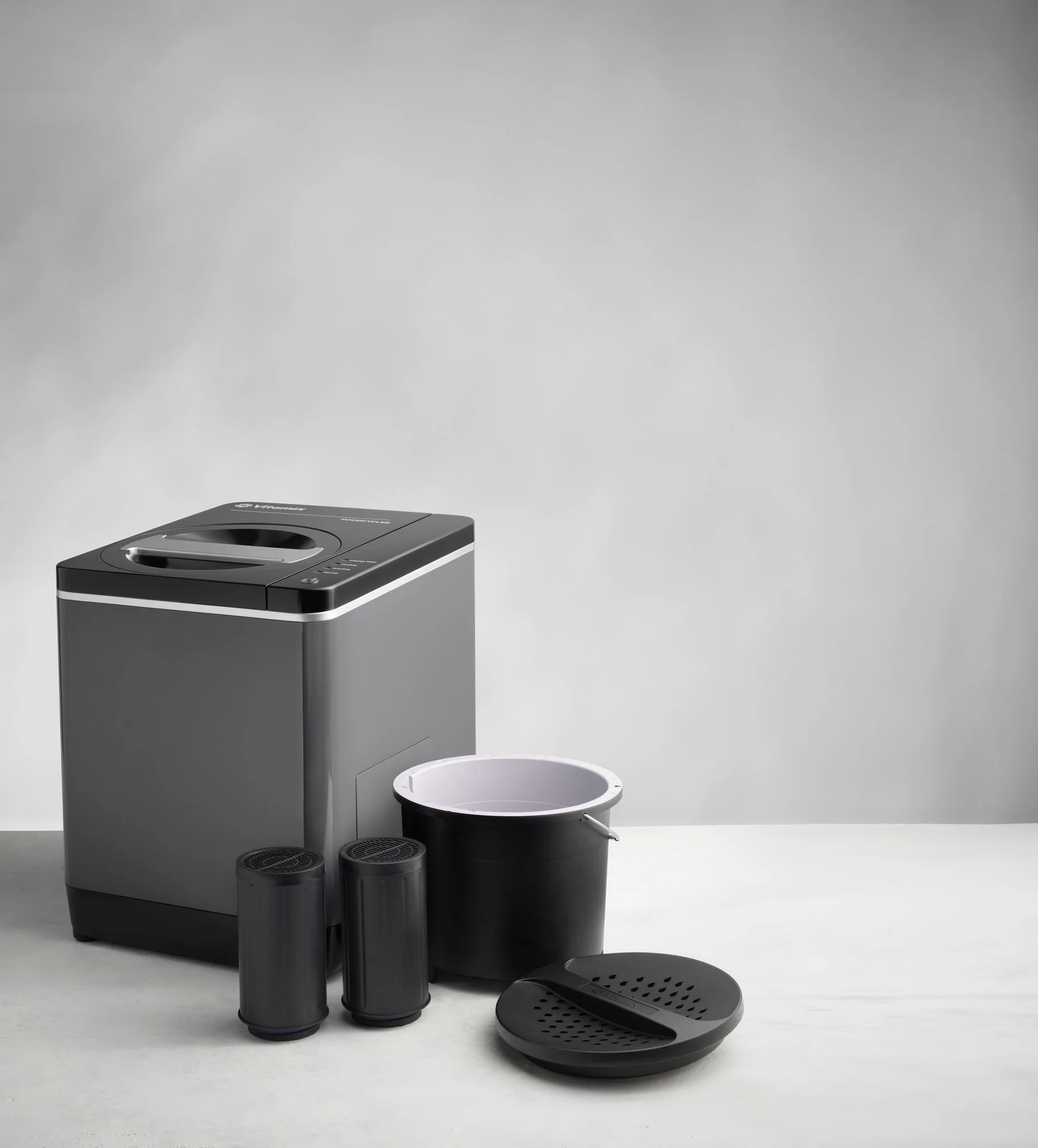
Vitamix Food Cycler
PRO TIPS: Don’t add meat, bones, dairy or fats to your compost – it will attract unwanted critters. Any large fruit or veggie pieces should be cut so they break down faster. And citrus peelings should be avoided as they kill microbes.
I can’t speak about composting without also touching on cooking and food usage. Many food scraps can be saved and reused to make a nourishing and wholesome broth, such as animal bones and veggie peelings/ends. Making broth is easy, stretches your grocery dollars and further lowers your environmental impact. At my home I save my favourite savoury veggie ends and peelings from a weeks’ worth of cooking – such as carrots, onions, garlic, beets and artichokes – in a bag in the fridge. They can also be frozen until ready for use. Simple broth recipes are available online and as many great chefs know, broth is easy to use and a wonderful starter for many mouth-watering recipes.
Happy brothing, happy composting and happy gardening dear readers – summer is upon us! OH
Melanie is a certified horticulturalist and landscape designer.