
O Canada
STORY LYNNE RICHARDSON
NATURE AT YOUR DOORSTEP
It’s safe to say that a love of nature is something Canadians hold dear. Birds are one of the closest connections to nature we have. Whether you live in the city or the countryside, you’ll always have close encounters with birds. Step outside to hear the resident robin singing cheerfully. Take a drive in the country and spot swallows swooping over fields. Go for coffee in town and watch House Sparrows hop around, cleaning up fallen crumbs. Enjoy a weekend camping or cottaging and wake up to the iconic call of the loon. We are a “birdyfull” country. As we celebrate our identity around Canada Day festivities, let’s take a gander at birds that are iconically Canadian.
CANADA’S OFFICIAL BIRD
Well, go figure, we don’t have one! We have the beaver as our national animal, the maple tree as the official arboreal emblem and even an official horse – the Canadian Horse. Many people think the Common Loon is our national bird, but it isn’t. However, there is a growing movement to designate a bird that represents the entire country. Canadian Geographic magazine recently consulted ornithologists, conducted an online survey and held debates on this very topic. The top five finalists for Canada’s official bird were the Common Loon, Snowy Owl, Canada Jay, Canada Goose and Black-capped Chickadee. Competition was stiff, and although the loon won the popular vote, the Canada Jay was chosen by the Royal Canadian Geographical Society. Choosing a winner was not an easy task, given our country’s colossal size and the diversity of its bird populations.
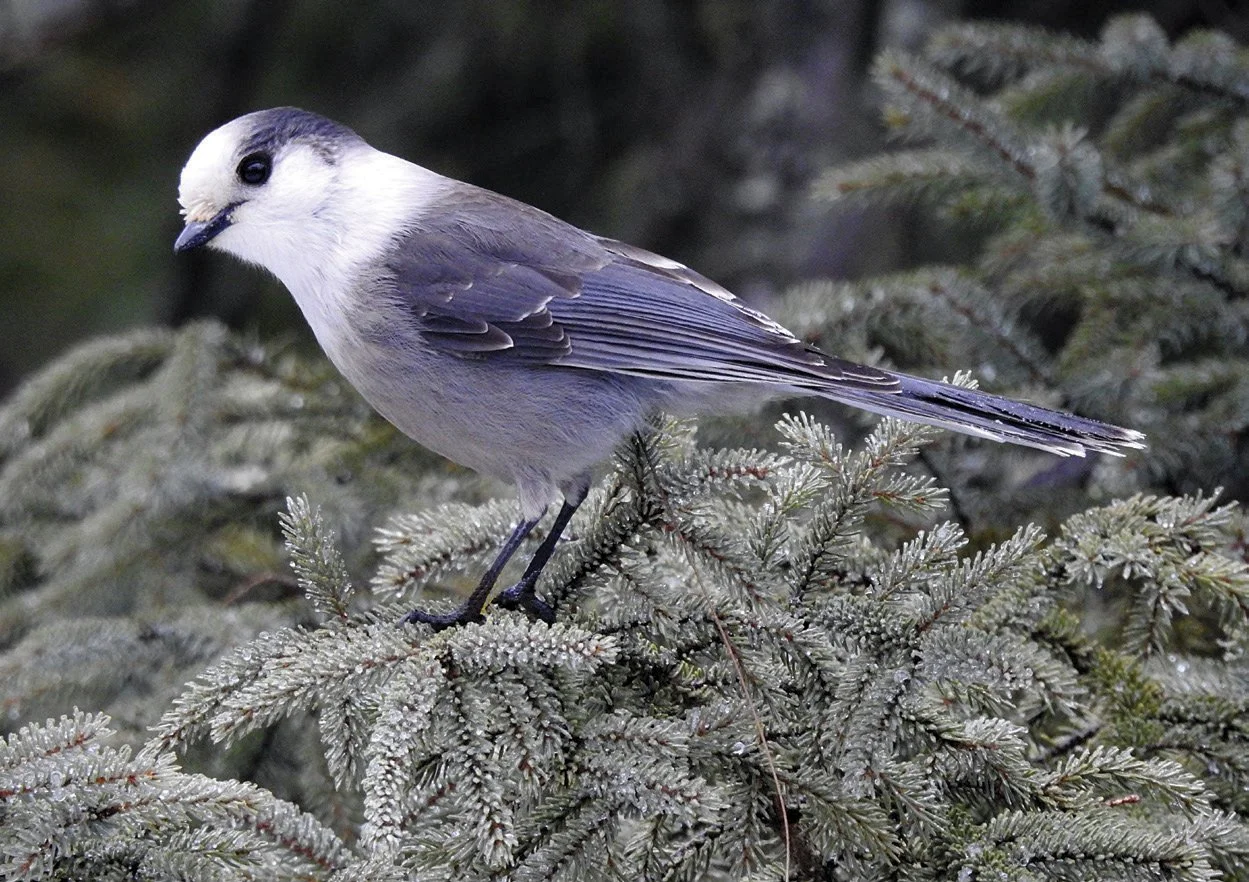
Canada Jay
ONTARIO’S OFFICIAL BIRD
Ontario does have an official bird, the ever-popular Common Loon, designated in 1994. The loon is a fitting avian ambassador for Ontario, given that this province has more than 250,000 lakes, many of which are home to loon families each summer. With its soul-stirring yodels, wails and laughs, the loon is the iconic call of the wild and a treasured symbol of our wilderness. However, one of the reasons the loon wasn’t chosen as Canada’s national bird was that it was already taken as Ontario’s avian emblem.
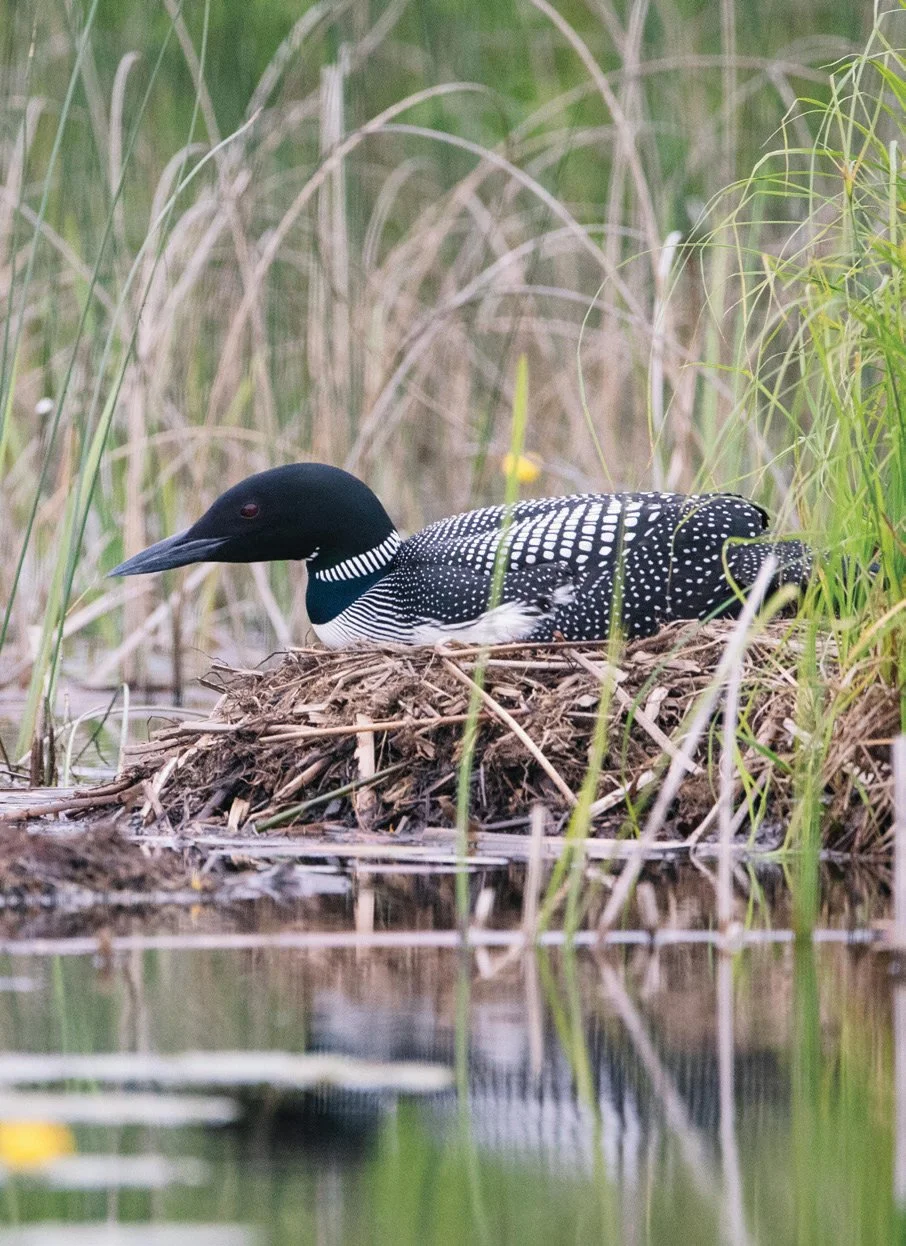
Common Loon
CANADIAN NAMESAKES
We do have birds named in honour of Canada. Three, in fact. First up is the already mentioned Canada Jay. Until recently, its official name was Gray Jay. It was originally named Canada Jay, but somewhere along the way, the American Ornithological Union (AOU) decided Gray Jay was more suitable. However, in 2016, a long-time Gray Jay researcher at Algonquin Provincial Park, along with other Canadian ornithologists, successfully petitioned for a change back to Canada Jay. Their widespread presence across the country contributed to their proposal as a national bird, along with their year-round residency, as they never migrate in winter. And they’re not sorry about that; they thrive in the cold. Much like these birds, Canadians strongly identify with long, cold winters. Canada Jays are very intelligent and curious, but perhaps their most Canadian attribute is their friendliness. They’ll pop out of the woods as you wander along, check out what you’re up to, join you at your campsite and even politely accept a treat from your hand if offered. They are a true representative of our Canadian character.
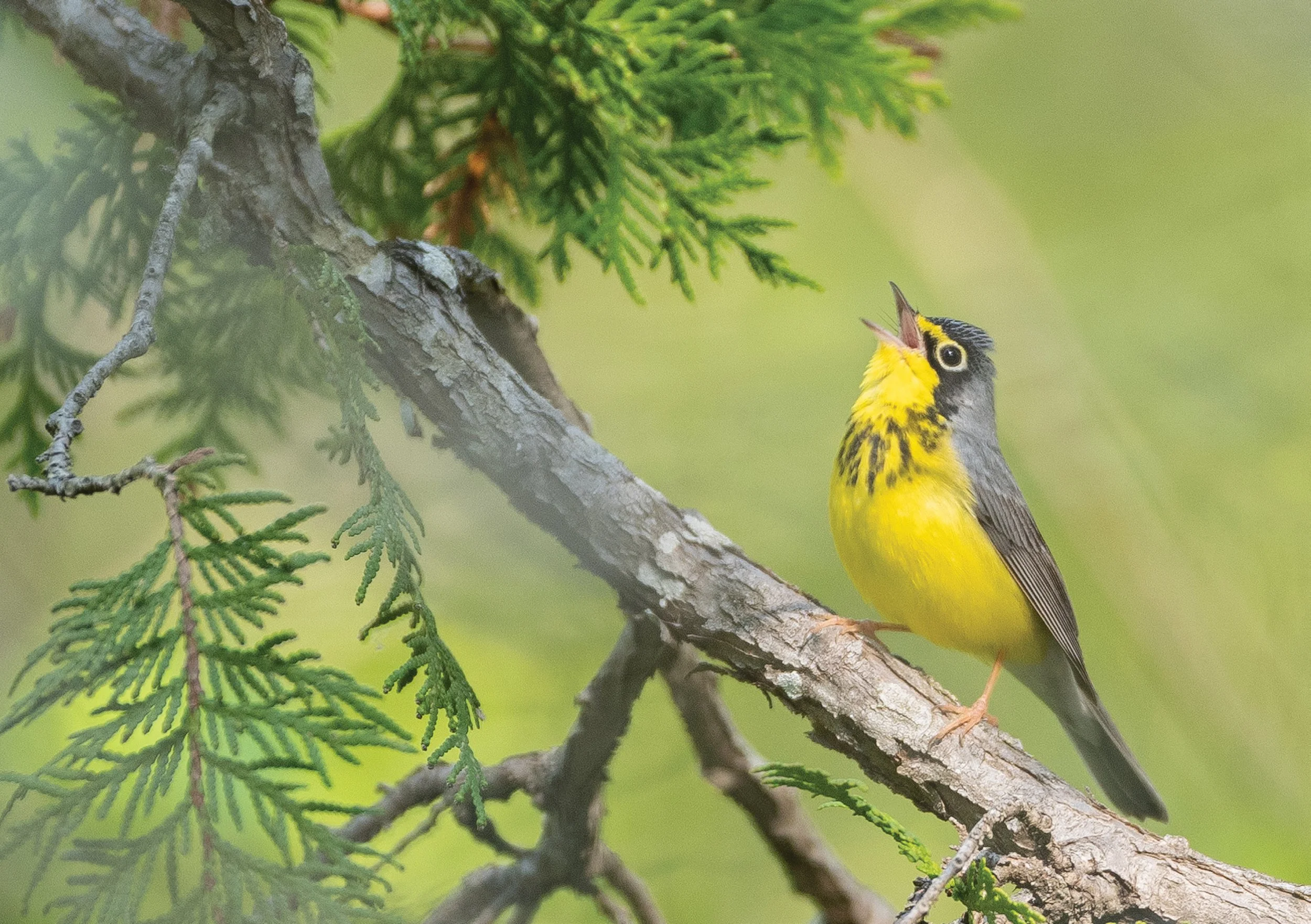
Next is the Canada Warbler, a yellow-bellied and bespectacled bird that sports a black necklace across its bright throat. It was named after Canada, as it was first discovered here. Like us, it loves our vast forests – most of its population breeds in our boreal. It’s a much sought-after species by birders, passing through only briefly in migration before tending to secretively hunker down to nest deep in the forest. A true Canadian homesteader. And finally, it tops off its allegiance to our country with its vibrant song – the mnemonic can be interpreted as the bouncy “Canada is so sweet.”
The third bird with our country’s namesake is the ubiquitous Canada Goose. This widespread, well-known bird can live almost everywhere, making it omnipresent across Canada. Although they’re hard to miss, these geese faced near extinction in the early 1900s. Overhunting and habitat destruction devastated their numbers, leaving only a few remaining pockets of survivors. Conservation efforts brought the species back due to the birds’ high reproductive rates and longevity. Then, again, due to human actions, they became overabundant. Our urban parks, lawns, golf courses and sports fields provide the precise short-grass food supply they thrive on. We inadvertently made living easy for these big birds, even to the extent that they’ve lost their migratory instinct. And that’s a shame, because not so long ago, the sights and sounds of great V-shaped flocks of geese overhead were a welcome and unmistakable sign of a Canadian spring.
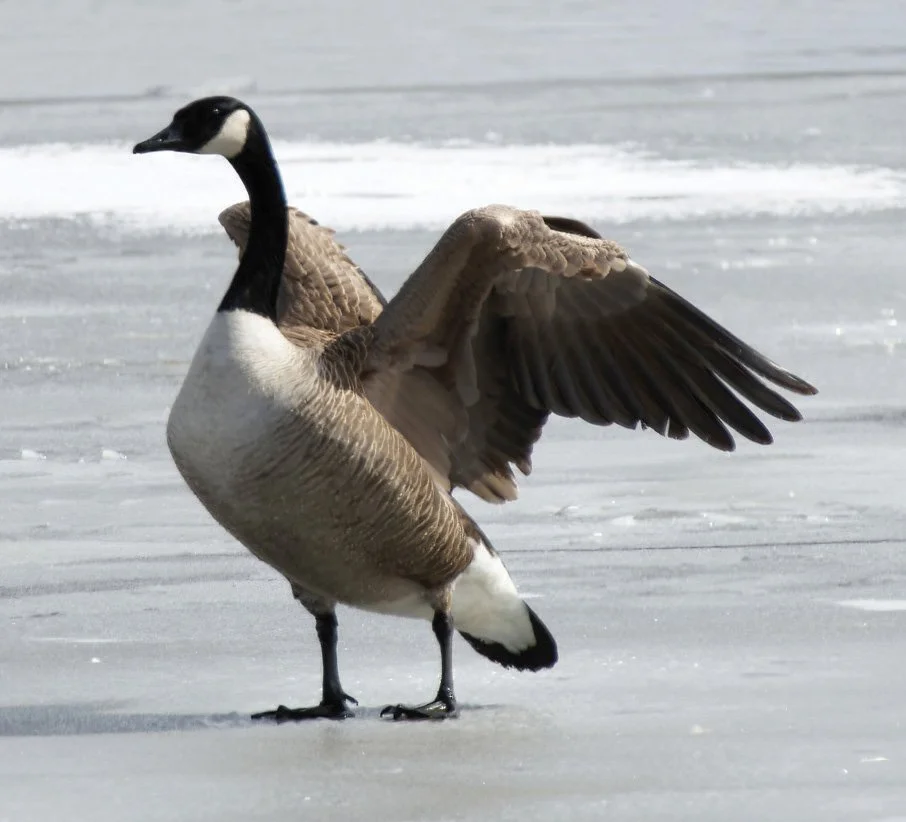
Canada Goose
ONLY IN CANADA
Next up on our list of patriotic Canadian birds are two species that nest only in Canada and nowhere else in the world. These species are breeding endemics, meaning they winter elsewhere but come to Canada to raise their young. The Harris’s Sparrow, a dapper species sporting a black face and bib and a perky pink bill, breeds in spruce tundra across our northern territories. True to its Canadian heritage, its song is a distinct, sweet, three-note whistle that can only be described mnemonically as “Can-a-da!”
The Ross’s Goose, a cute but tough snow-white goose with black wingtips, is our other Canada-only nester. Its very limited breeding area is along the Arctic Ocean shoreline of Nunavut and adjacent islands. While they migrate south to their wintering grounds along a narrow route, they are frequently seen in the company of Canada Geese during migration, far from their usual route. They seem to need little coaxing to discover other parts of Canada, just as many of us are doing these days.
MADE IN CANADA
Beyond this, millions upon millions of birds make their way to Canada each spring to raise their young in our vast, bird-friendly forests. Ornithologists refer to our immense boreal forest as North America’s “bird nursery” due to the incredible number of birds that nest here each year. The boreal, one of the world’s largest forest ecosystems, spreads across Canada from Alaska to Newfoundland. Up to three billion baby birds and their parents, representing 300 species, nest or forage here, reflecting an avian diversity much like Canada’s multicultural mosaic. Like us, these baby birds have won the birth lottery by being hatched in such a glorious and free land. If I were to anthropomorphize them, I’d say they’re proud Canadians! OH