
Building Biology
Designer Tamarisk McNalty Stephens explores the principles of Building Biology.
The discipline of Building Biology focuses on the relationship between the natural and built environments with the goal of creating greater harmony between the two. With nature as the guiding principle, building biologists integrate a holistic approach to the design, build and/or renovation of residential dwellings to provide as little disruption to the surrounding environment as possible – while creating healthy homes.
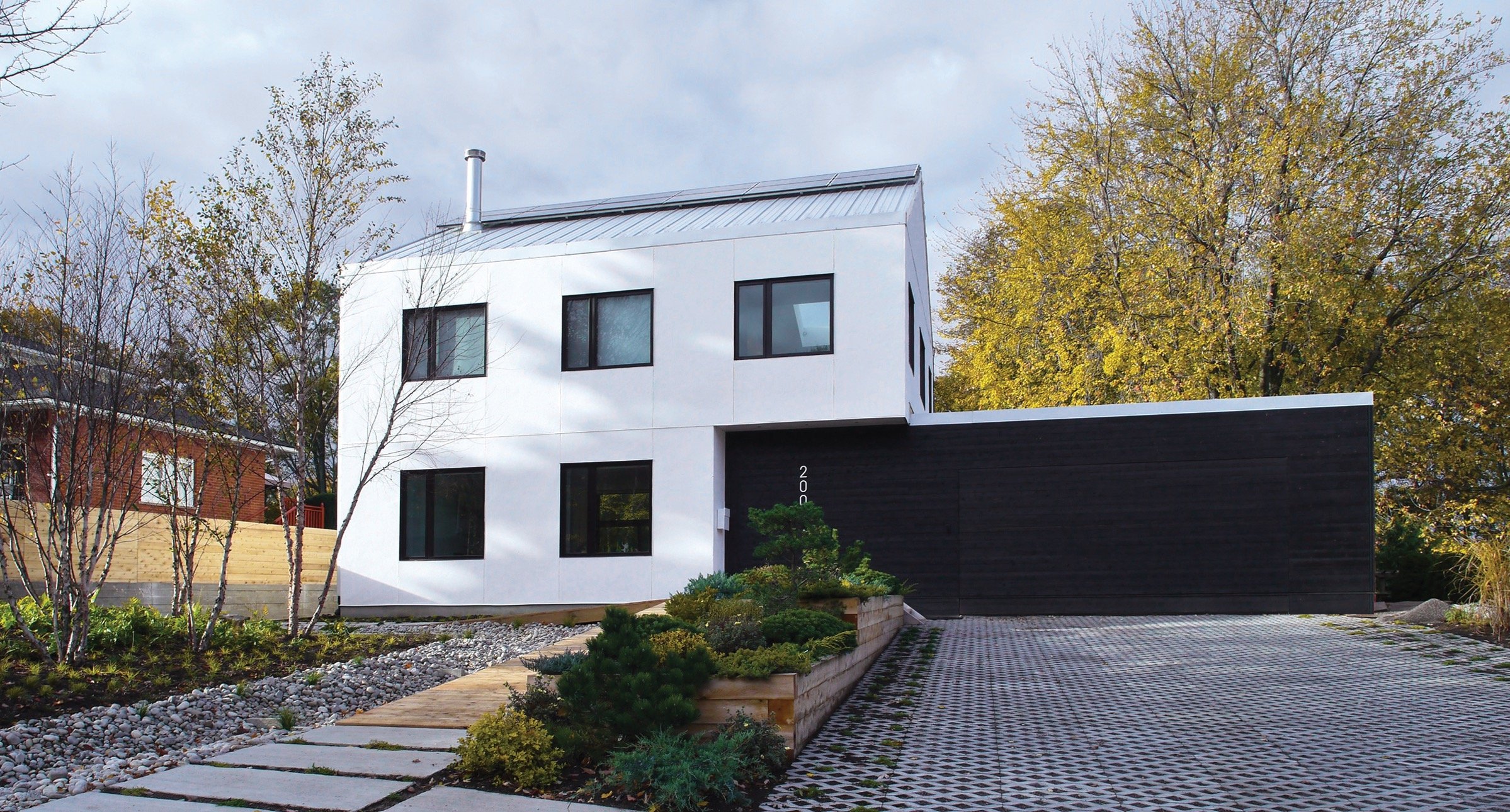
OFFICE OU / EVOLVE BUILDERS GROUP INC: Contemporary straw bale home
The principles of Building Biology can be grouped into five main topics:
SITE AND COMMUNITY DESIGN
The site and the placement of the dwelling should be free of health hazards (naturally occurring or human-made) and ensure occupants are not disturbed by pollution from air, soil, water, noise and electrical. The goal is to position dwellings in communities and developments that provide ample access to nature, sunshine and fresh air for families and individuals of all ages.
ELECTROMAGNETIC RADIATION HEALTH
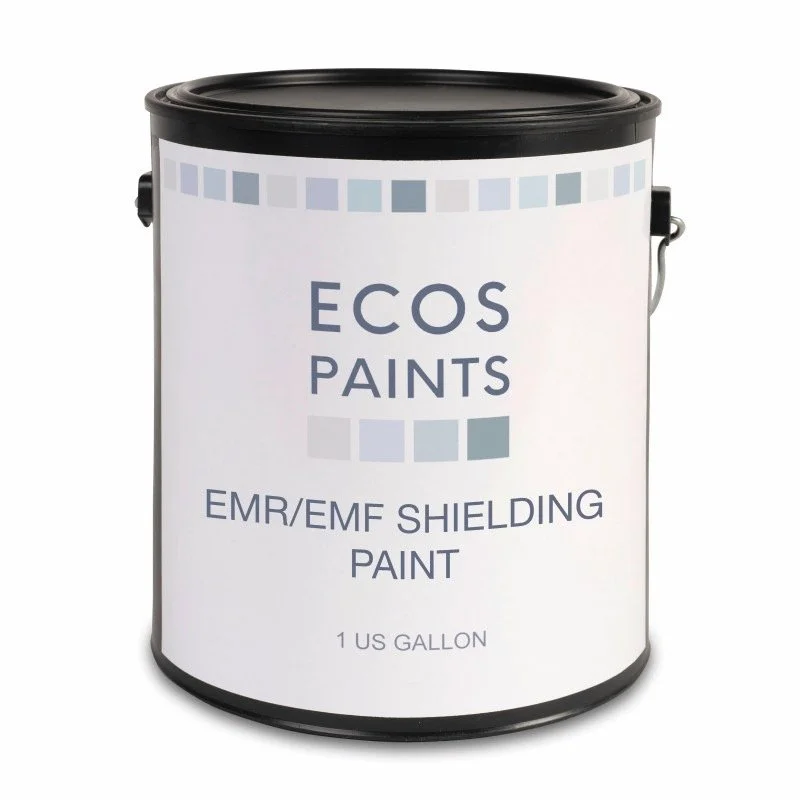
This is a topic that we’ve heard more and more about since the widespread introduction of wireless technologies. Many sources of electromagnetic radiation (EMR) exist, some human-made and others naturally occurring. Examples of sources include: electrical service, power lines, appliances, cell phone technology, synthetic carpeting, drapery and textiles, components in building materials, steel in furnishings and currents in the earth. Building Biology attempts to integrate strategies to minimize exposure generated from inside or outside a building.
Here are some simple and easy things you can do at home to lower exposure: Use a landline and minimize cell phone usage; turn off WiFi when not in use and keep electrical devices away from your bed. Some people put their bedrooms on circuits that can easily be turned off at night.
INDOOR AIR AND WATER QUALITY
A ventilation strategy is especially important in new construction. Although airtight homes are prized for their energy efficiency, the circulation of fresh air is crucial for a healthy indoor climate. This is achieved through the design and placement of windows and doors for ample natural ventilation as well as by installing a properly sized mechanical ventilation system.
The Building Biology process also aims to ensure moisture content remains low in dwellings. Building Biology strongly recommends a historically derived mass-wall construction method such as earth, clay or straw for their natural ability to allow the flow of vapour molecules through the wall assembly. These natural materials have the innate ability to buffer large amounts of moisture, and the flow-through process is very slow, so accumulation from condensation is insignificant and does not deteriorate the building envelope. Known as “breathable walls,” they can provide stable temperature and humidity levels, producing a comfortable living environment. The walls themselves, finished directly with plaster or with wood over furring strips, provide insulation and eliminate the need for many synthetic materials, which can reduce exposure to volatile organic compounds (VOCs).
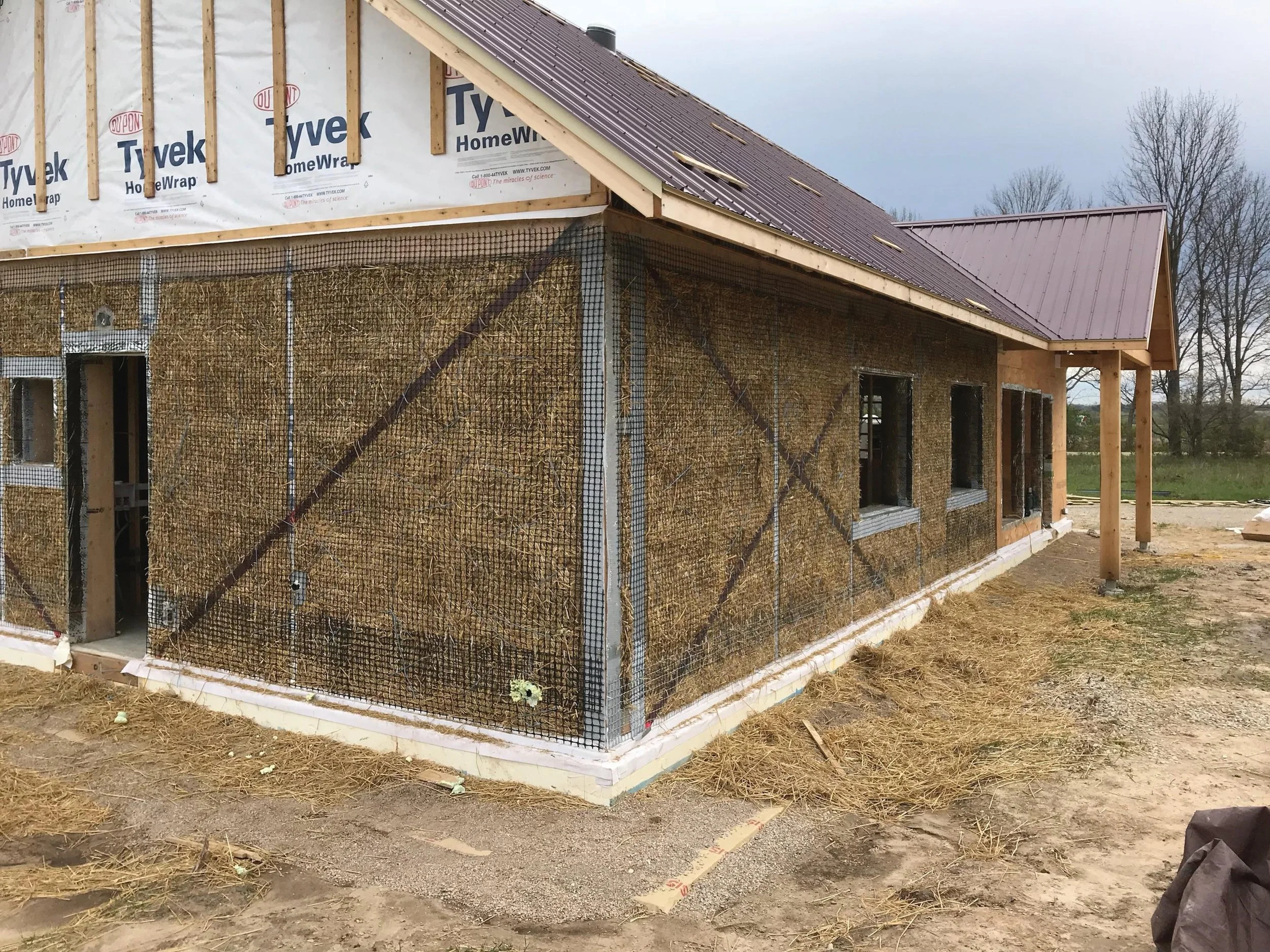
EVOLVE BUILDERS GROUP INC / HARVEST HOMES: Straw bale home construction
OCCUPANT WELL-BEING
To improve indoor air quality, consider selecting low-toxin natural materials and finishes. Providing stable and welcoming air and surfaces can be accomplished through radiant heating methods such as passive solar techniques and the use of thermal mass (such as stone surrounding a fireplace that holds heat long after the fire has burned out). Ergonomics of the human body are also important when considering furniture selections, natural light, a colour palette inspired by the surrounding natural environment and acoustics to mitigate unwanted noise.
ENVIRONMENTAL PROTECTION, SOCIAL RESPONSIBILITY AND ENERGY EFFICIENCY
The final tenet of Building Biology is the selection of materials and construction methods that promote health and well-being from the beginning of the process to the end. Care is taken to avoid materials that deplete natural resources or permit unsustainable harvesting practices along with life cycle costs of materials from an environmental and energy perspective. Buildings are designed in an energy-efficient manner to minimize energy consumption, provide water-saving features and power with renewable energy sources when viable. OH