
Cladding Counts
WORDS Tamarisk McNalty Stephens
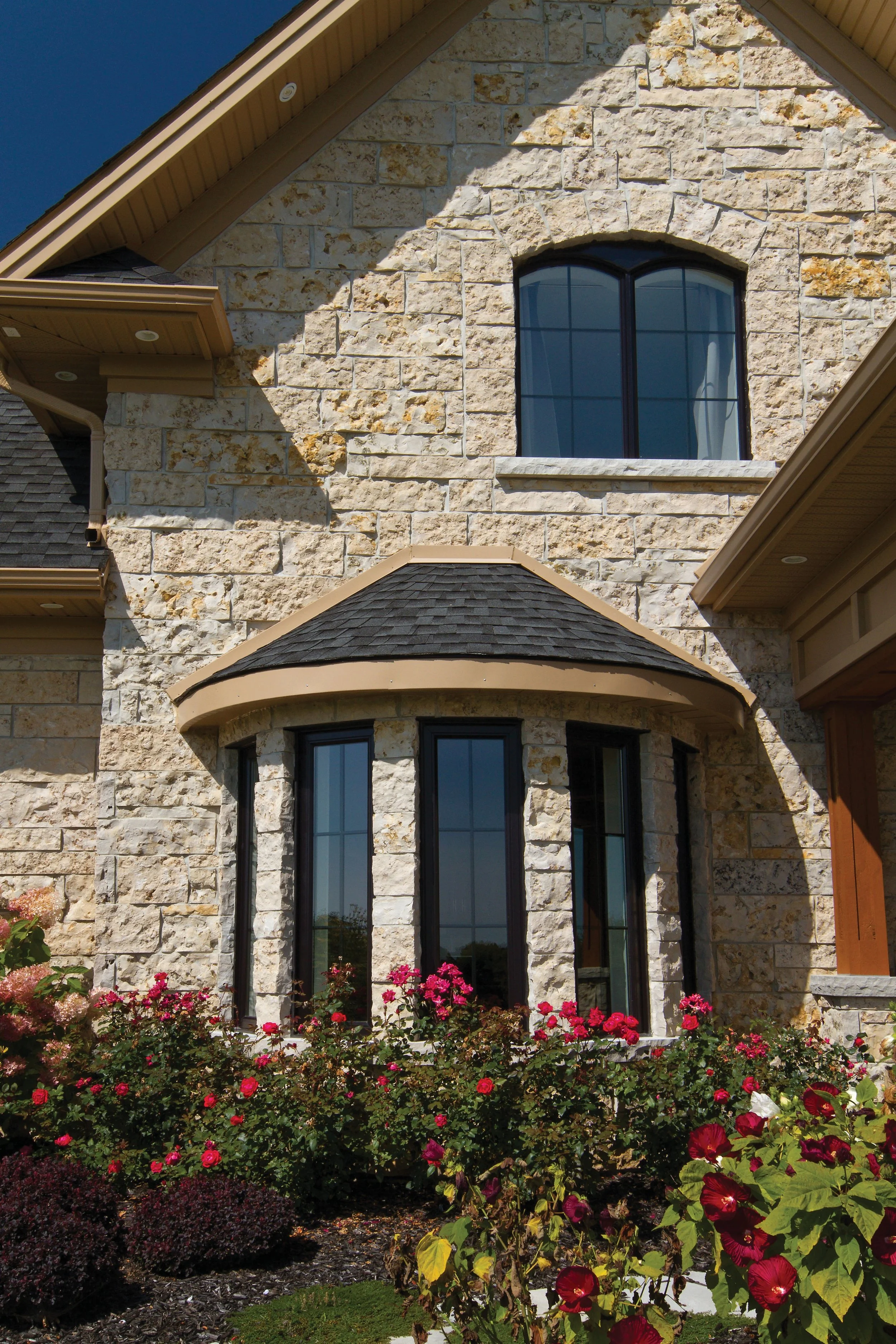
OWEN SOUND LEDGEROCK LIMITED: Strata Ledgerock
It is easy to become overwhelmed when faced with the enormity of the construction industry when starting a home project. We want the decisions we make to have a positive environmental impact, but we can’t always know if our decisions help. We must embrace the challenge and focus on doing the best we can, as the cumulative effect of one small decision, if repeated over many projects by many people, can make a difference.
Environmental issues are complex and there are no perfect sustainable solutions. Determining what is best for your project requires listing the pros and cons of materials and being willing to embrace compromise.
It is always important to ask questions and to be informed and educated about the implications of using a particular material. These questions should pertain to the entire process, from sourcing materials – local, raw, recycled, reclaimed and renewable – to processing, manufacturing and production. Consider the treatment and finishing of the materials, maintenance requirements (how durable is it?), and what will happen to it at the end of its useful life. Can it be recycled, repurposed or reused? Will it biodegrade?
Why not start on your home’s exterior the eco-conscious way? Cladding is any material used to cover a wood structure, and therefore represents on opportunity to marry sustainability, style and durability in your material choices.
Here is an overview of some common cladding options. Cladding is any material used to cover a structures exterior:
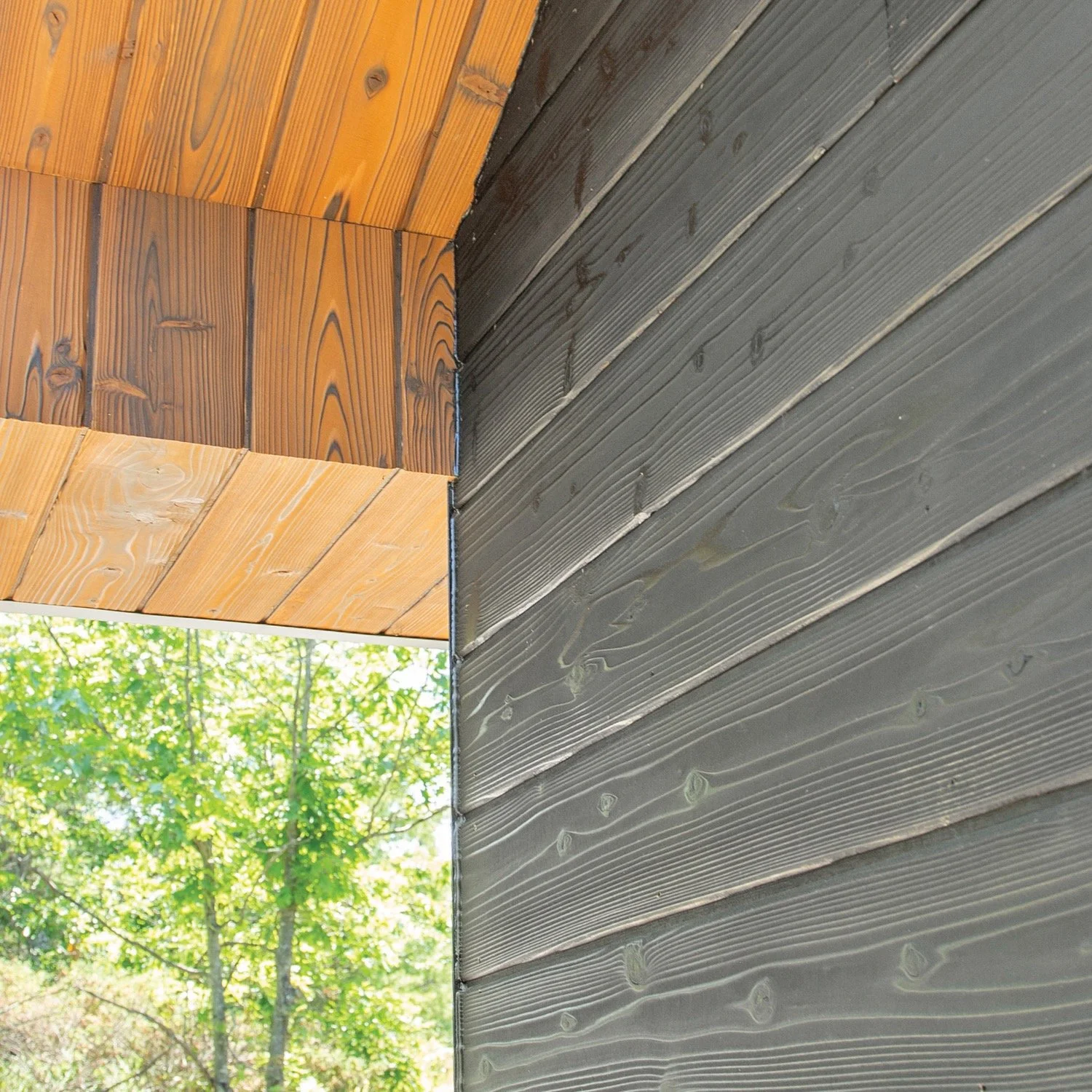
REESE MADISON & CO.: Essentials Yakisugi Wood Siding in Kohaku (Amber) & Shikkoku (Jet Black)
WOOD
Wood siding can have a low environmental impact as it is sustainable and can last for many years if properly maintained. It is a renewable resource and at the end of its lifecycle, it can biodegrade and nurture the growth of more trees. Just ensure it is responsibly harvested.
Cedar is particularly beneficial as a wood option because it naturally repels insects and is moisture resistant.
The application of pine tar is something to be explored for the treatment of wood as it is a natural substance and can produce a beautiful finish while contributing to increased longevity of the product.
Over the last several years we have also seen a North American adaptation of the traditional Japanese treatment of wood preservation called Yakisugi, which is the process of charring wood to improve durability and resistance to weather, water, rot and insects. The longevity
of this product can be 80-100 (or more!) years when care is taken to properly maintain it, which involves applying oil every 10-15 years.
There is also a larger selection of engineered wood siding products available. They are durable and also utilize recycled components during production.
METAL
Metal siding is often manufactured from recycled materials (such as steel and aluminum) and there are many profiles and designs available. It also lasts a very long time and requires little maintenance. Metal siding also accepts paint well should the exterior need modernization or a refresh down the road. A downside is that it can be dented rather easily, depending on the gauge and the design.
STONE
Stone siding is a great option that can last forever. Stone is heavy to transport and requires significant reliance on fossil fuels during the mining process, however, aside from cutting, the manufacturing process is limited and it also requires no chemical surface treatment. Manufactured stone might also be a consideration. There is generally less waste during installation because the pattern and pieces are designed to fit together with some precision. They are lighter than natural stones but generally do not last as long. As with many manufactured products, the aesthetic is often not as genuine as its natural counterpart.
BRICK
Brick is also a very durable and low-maintenance option. The components are naturally sourced. During manufacturing, bricks are baked in intense heat for a long time requiring significant energy inputs, however companies are innovating manufacturing methods that reduce the environmental impact. A local source for brick is the best option as the heavy nature means there is significant fuel consumption to transport.
FIBRE CEMENT
Fibre cement siding is a product manufactured from materials including sand, cement, minerals and organic materials made to mimic natural wood siding, concrete, etc. It is durable with minimal maintenance. Newer versions often incorporate recycled materials and are more lightweight than previous models (so you can transport more per load, which is better for the carbon footprint). However, some are manufactured under significant heat, which can be energy intensive.
VINYL
Vinyl siding is a popular siding choice for many homeowners due to its affordability. It is made from PVC, which is not environmentally friendly. However, there is very little waste during manufacturing and its lightweight nature makes transport more energy efficient. Some companies have been developing programs to repurpose and recycle vinyl siding, so hopefully less of it will end up in the landfill. OH