
A Sense Of (Re)Purpose
Designer Tamarisk McNalty Stephens shares her ideas.
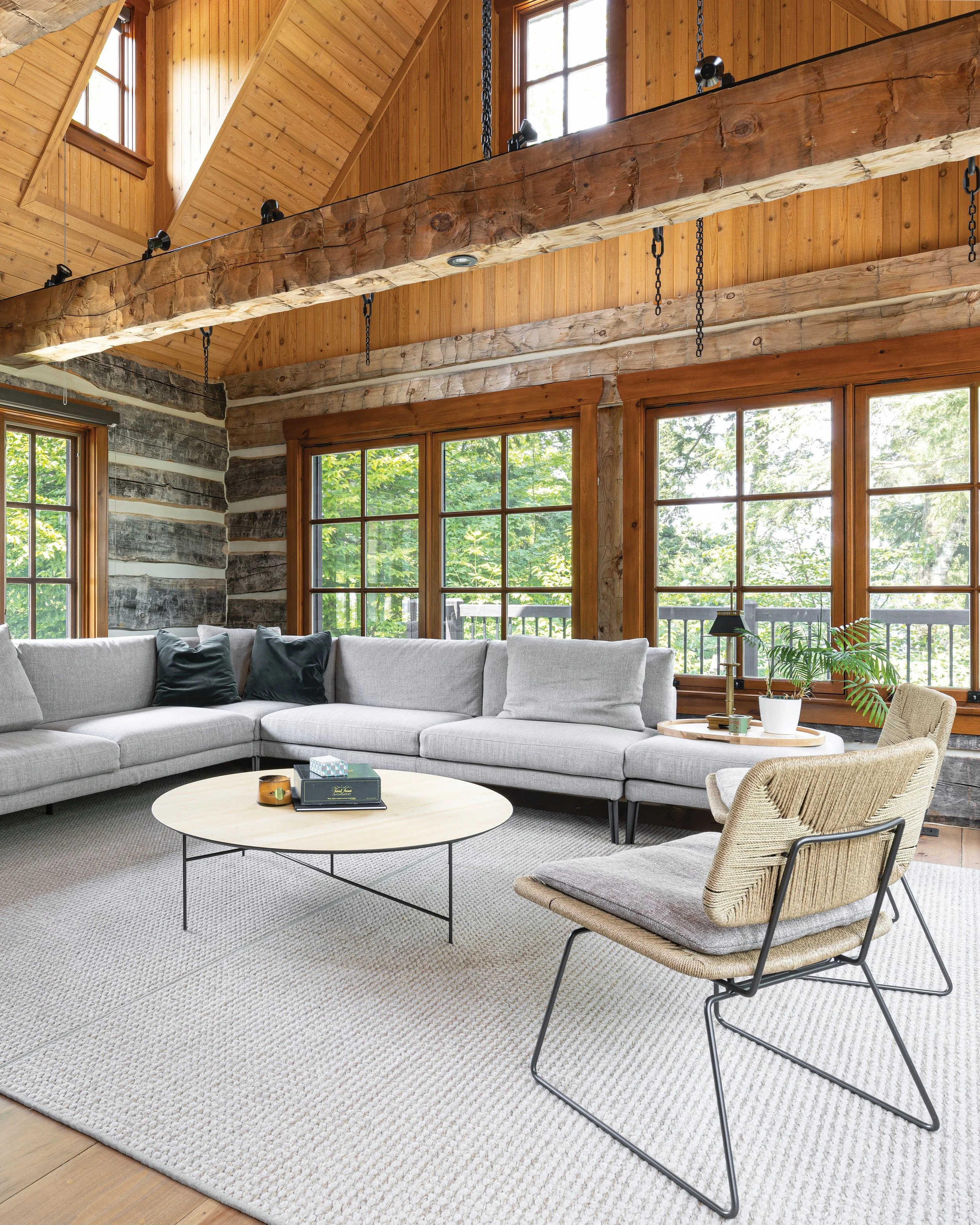
Ray Winterstein, of Winterstein General Contracting, used logs from three century-old cabins in the Collingwood area to assemble this log home. PHOTO: SABRINA COOPER
There is also a significant sustainable benefit when you repurpose an item as you eliminate some of the environmental implications associated with purchasing new, including the procurement of raw materials and the consumption associated with the manufacturing process and transportation of goods.
Be mindful that there is a labour cost related to salvaging architectural materials, as it is more time-intensive in demolition to remove items without damage than it
is to go in with a sledgehammer. Also, it takes time to prepare items or materials for reuse (such as cleaning, removing nails, sanding, planing, re-enamelling, etc.).
However, these costs can generally be offset by saving on disposal fees and the cost of new materials.
Where To Look
If you know at the outset of your project that you’d like to include reclaimed materials, set aside the appropriate time to search before your project begins. You can source items at architectural salvage companies, antique fairs and flea markets, online buy and sells, garage sales, the local landfill (some offer a reuse area,
but check with your local municipality for conditions), and local Habitat for Humanity ReStores.
If you have friends, family or neighbours renovating a century home or demolishing an old building, approach them to inquire if any materials are available. Always ask for approval before you help yourself to a bin outside a demolition site.
What To Look For
Depending upon the scope of your project, you may be engaging the services of a design and construction team. Discuss at the outset to make them aware of your intention to integrate reclaimed materials and provide any details
on items you have already sourced. This will help ensure your contractor and trades can budget more accurately for material, time and labour costs. It also means that the contractor can place reinforcement where required, plan how to transition from one material height to another and make any recommendations from their experience.
When sourcing goods and materials, thoroughly inspect their condition. Beyond the desired patina and authentic features such as hand-chiseled details and nail holes, closely examine to see if there are any structural defects or damage that may affect the viability of reusing the item. An example would be reclaimed wainscotting stored in a humid location. The tongue and the groove may no longer fit together, and each piece would need to be remilled, which can add significant time to installation.
When purchasing, ask about the history of the product or material, such as where it originated and why it was part of a demolition. This offers authentication (especially if costly) and provides an interesting point of conversation to your home/project.
Items must also adhere to current building code standards. Items such as salvaged balustrades and spindles may need to be modified, as the height requirements have changed over the years. Vintage light fixtures need to be upgraded by a certified professional to pass electrical safety standards. Mantels may need to be adjusted to ensure they provide the required clearances of the fireplace unit that will be installed.
How To Incorporate
How repurposed materials can be incorporated into your home is limited only by your imagination, the willingness of trades, and the building code (to ensure the safety and well-being of occupants).
EXAMPLES INCLUDE:
Installing reclaimed timber as ceiling cladding or beams, floor coverings, wall panelling or wainscotting.
Repurposing fireplace mantels in an updated design.
Installing reclaimed windows in interior partitions to create a barrier while still allowing the light and the view beyond to pass through.
Integrating a cast iron or concrete sink in the laundry room.
Creating a focal point with a unique, hand-carved interior door.
Hanging a collection of vintage lights.
Installing reclaimed brick or stone as a floor, feature wall or fireplace surround.
Whether you use a little or a lot, repurposing is a guaranteed way for your home to evoke the character and charm inherent in the materials. OH